Coca-Cola switches to 100% rPET
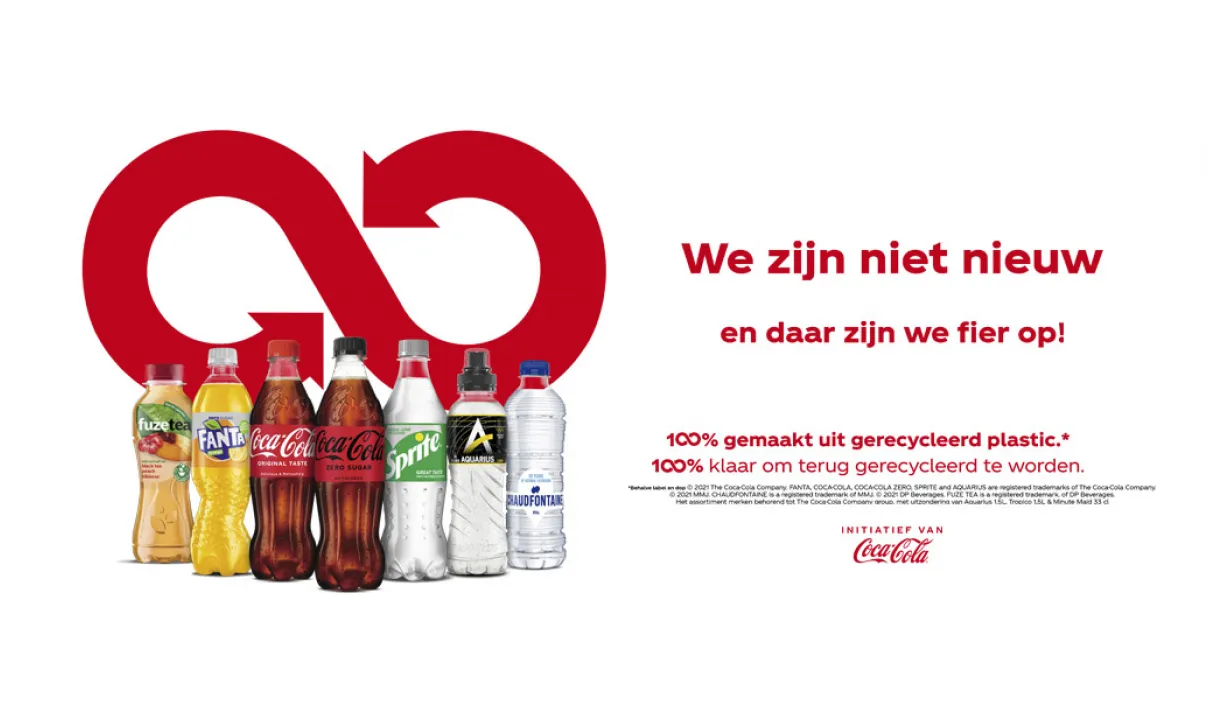
You may barely notice, but from this summer, Coca-Cola’s PET bottles in Belgium and Luxembourg will contain no virgin plastic[1].
All bottles of Coca-Cola, Fanta, Sprite and other brands in the portfolio[2] will now be made from 100% recycled plastic. Investing in recycled material saves 14,000 tonnes of virgin plastic each year, compared with bottles made from virgin plastic. In addition, the carbon footprint of 100% recycled plastic is up to 70% lower than that of virgin plastic made from fossil feedstocks.
Less packaging, more sustainability
Packaging accounts for 43% of the total CO2 emissions from Coca‑Cola European Partners’ operations. Making packaging more sustainable, with a positive impact on CO2 emissions, is therefore a key objective in the company’s sustainability strategy. Four years ago, Coca‑Cola set out its ambition to use less packaging wherever possible, collect 100% of bottles sold by 2025, and ensure that at least 50% of the material used in its plastic bottles would be recycled plastic by 2023, with the aim of accelerating the move to 100% recycled plastic (rPET) across Western Europe by 2030.
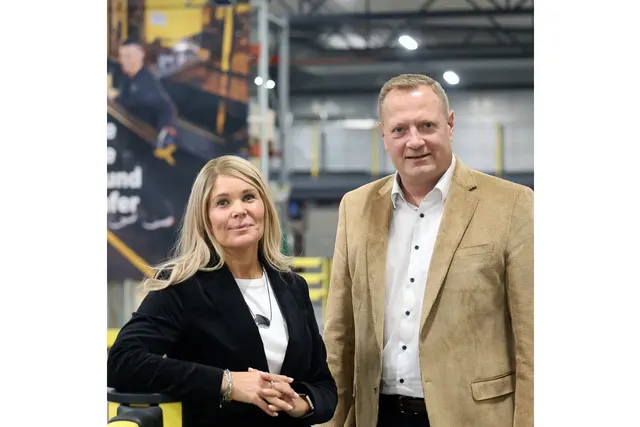
Coca‑Cola’s achievement of this final ambition in Belgium and Luxembourg, making it one of the first in Europe to do so, is certainly a milestone to be proud of. “We have made this one of the key priorities of our policy. And we are investing heavily: this year, the switch to 100% rPET will cost us at least €10 million[3]. Recycled material is more expensive than virgin plastic,” says An Vermeulen, Country Director Belgium-Luxembourg at Coca‑Cola European Partners (CCEP). “By the end of last year, we had already moved to at least 50% rPET in all our bottles. Just over six months later, we are at 100%, which means we no longer use any virgin plastic made from fossil feedstocks for our plastic bottles in Belgium and Luxembourg. This saves 14,000 tonnes of virgin plastic each year and significantly reduces our carbon footprint.”
Collect every bottle to make a new one
But this major milestone is certainly not the end of the road. Coca-Cola’s ambitions go much further. “We want to keep innovating to use less packaging wherever possible, and collect one bottle for every bottle sold so it can be made into a new bottle,” says An Vermeulen. “The next important step is to make our packaging circular by 2025. To achieve this, bottle collection needs to improve further. Currently, 92% of our bottles in Belgium are collected through Fost Plus’s blue bag system. This is certainly not bad, but it could be better. Collecting packaging on the go is particularly challenging, which means that some bottles end up as litter in the environment.”
“There are still a number of challenges, which we want to address together with our partners and the industry as a whole, to minimise the footprint of our packaging, enable people to enjoy our drinks as sustainably as possible and become a fully climate-neutral company by 2040. But we are confident that we will achieve our ambitious goals. Today, we have provided clear proof of that,” concludes An Vermeulen.
[1] Excluding cap and label
[2] All PET bottles in the brand portfolio belonging to The Coca‑Cola Company group, except Aquarius 1.5 l, Tropico 1.5 l and Minute Maid 33 cl (produced in Spain and France).
[3] Compared with using virgin plastic
Question about this story? Ask your question
Keep following this
Get an email when a new story is published. No account needed.
- ThemeDeveloping new foods
- SubjectNews