FrieslandCampina is first Belgian dairy producer with a 100% recycled bottle
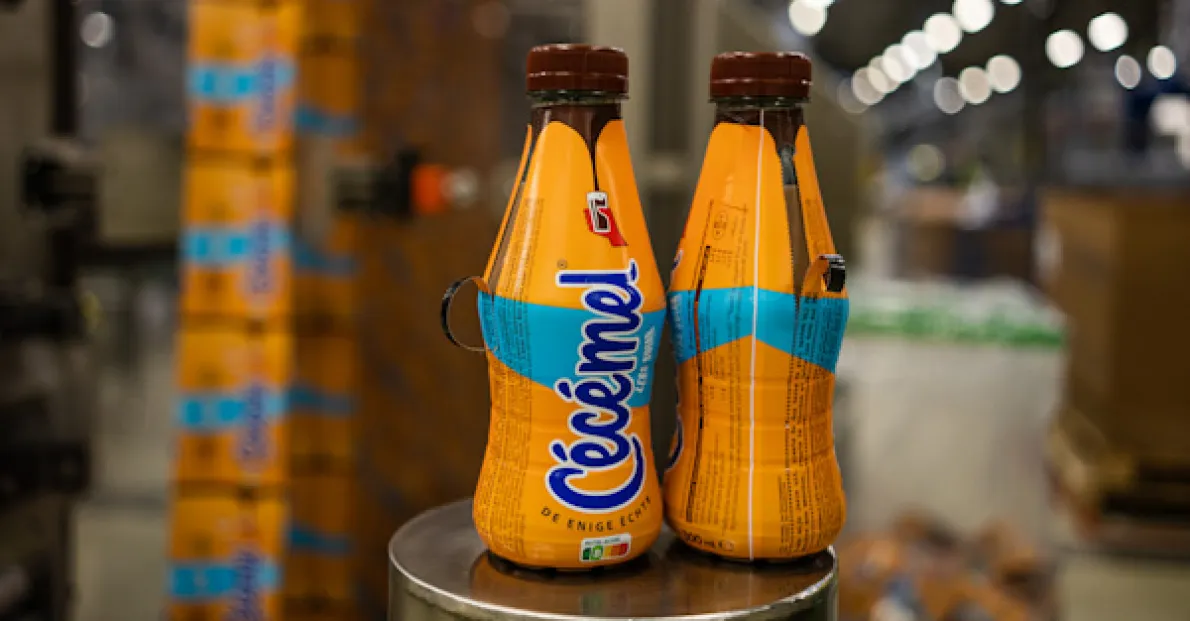
FrieslandCampina has a first to its name: it is the first Belgian dairy company to produce bottles made from 100% rPET.
Cécémel is first to make the switch and will now also come with a peel-off sleeve. FrieslandCampina is also raising consumer awareness, making it easy for people to separate the bottle from its packaging themselves and recycle both correctly.
100% rPET
In January, FrieslandCampina announced a major investment in a new, high-tech and sustainable rPET line at its Aalter site, for PET dairy bottles made from 100% recycled material. The new line uses less energy and is more efficient, converting more than 125 million existing PET bottles made from 20% recycled plastic into bottles made from 100% recycled material this year alone. The use of recycled material will avoid the need for an additional 1.9 million kilograms of ‘new’ plastic each year, equivalent to almost 8 of the Atomium’s 9 steel spheres.
The new rPET line is now operational, and the first Belgian 100% rPET dairy bottle, a Cécémel bottle, has rolled off the production line and will soon be available in Belgian shops. This goes well beyond the European requirement to use only drinks bottles made from at least 30% recycled material by 2030. The design of Cécémel’s first 100% rPET bottle*, previously made from 20% recycled material, remains unchanged. However, the rPET bottles for Cécémel and Fristi will both get a new peel-off sleeve.
Easy-to-use zip packaging helps consumers recycle more effectively
Unlike water and soft drinks, dairy products must not be exposed to sunlight. To ensure fresh, high-quality and flavourful products, PET bottles are therefore given a jacket, or sleeve. Since a PET bottle can only be recycled optimally if consumers remove this sleeve, FrieslandCampina’s Research & Development department has developed a ‘zip fastener’. This makes it easy for consumers to remove the sleeve. FrieslandCampina worked closely with Fost Plus, the non-profit organisation responsible for collecting and recycling household waste in Belgium.
Without their sleeves, the ‘bare’ bottles are easier for automatic sorting machines to identify, and can be recycled more easily and effectively. As part of the fight against litter, the text on the zip also encourages consumers to put the cap back on the bottle after use. *The bottles produced on the new rPET line are made from 100% recycled material, but the sleeve and cap are not.
Plastic more sustainable than single-use glass
Jeroen Van de Broek, Managing Director at FrieslandCampina in Belgium: “These are two new milestones in making our supply chain more sustainable. By becoming the first Belgian dairy producer to bring 100% rPET bottles to market, we are taking another step in the right direction. This allows us to minimise the use of ‘new’ materials and use 100% recycled material. We also want to raise consumer awareness with the new peel-off packaging, and are working closely with Fost Plus to promote recycling. Following the introduction of paper straws and bio-based kraft, these new initiatives further underline our ambition to make packaging fully circular by 2050.”
Fost Plus welcomes these innovations from FrieslandCampina. Patrick Laevers, Managing Director of Fost Plus: “PET is lightweight and easy to recycle. After recycling, this material can be reused and processed into new rPET bottles or other packaging and products. FrieslandCampina is unique in this respect, as the first Belgian dairy producer to opt for 100% rPET. Consumers can also make a big difference to the recycling process with a small gesture: peeling the sleeve off the bottle. We can only welcome FrieslandCampina’s efforts to communicate this and raise awareness.”
*The bottles produced on the new rPET line are made from 100% recycled material, but the sleeve and cap are not.
Question about this story? Ask your question
Keep following this
Get an email when a new story is published. No account needed.
- SubjectNews