How hygienic is your drainage system?
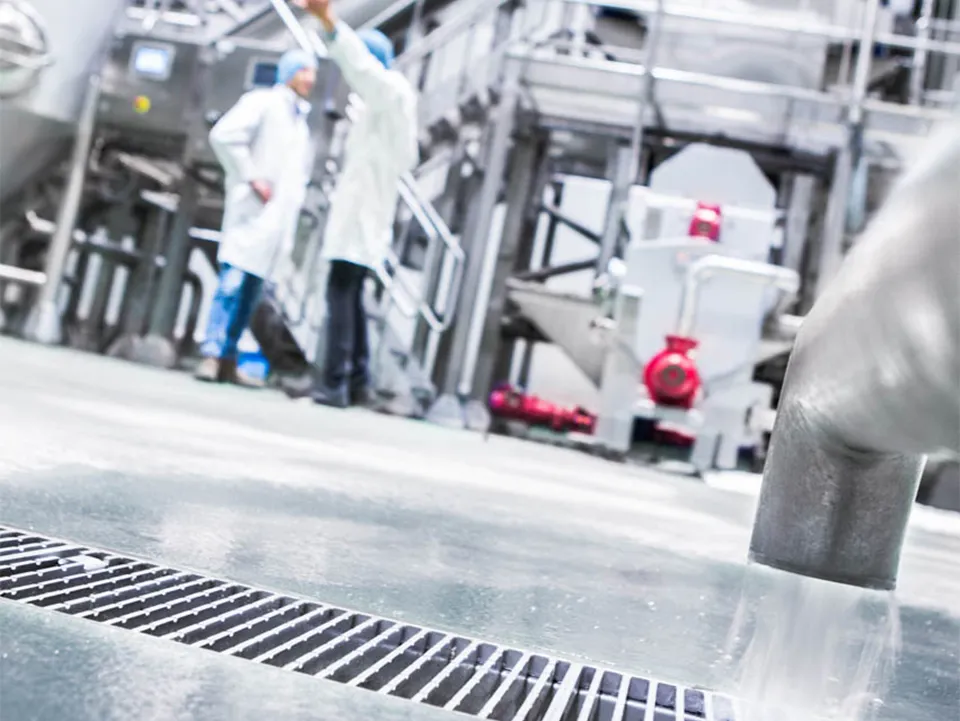
The importance of a well-designed drainage system is still underestimated.
The importance of flooring and drainage in a food factory is still often underestimated. Yet they are essential for ensuring optimum hygiene and reducing the risk of production stoppages caused by blockages, flooding and leaks. “That is why it is important to take a holistic approach to the design,” says Reggy Dekeyser of ACO.
Where are the weak points in drainage systems usually found?
“Food companies often choose to protect their walls with a water-resistant coating. This adds an extra hygienic dimension. But that only works if you also reconsider how the wall and floor meet. By raising the edge slightly and creating smooth, easy-to-clean curved corners, you are on your way to a truly water-resistant drainage system. It will also provide protection against the impact of vehicles and machinery.
In addition, food companies need to consider hygienic design and the right capacity. They should take stock of their current and future production activities and where they take place in the factory. The questions they should ask themselves are: what type of liquid or wastewater do I want to drain? What thermal loads and shocks must my drainage system withstand? Where is the machinery that generates the wastewater located? If it is metres away from a drain, for example, the system will be of little use.”

How important is the floor itself in this context?
“Crucial. It must have the correct gradient, so that wastewater runs down from the wall onto the floor and into the drainage system. If the gradient is wrong, water may collect on the production floor, creating a slip hazard and unnecessary hygiene risks. There must also be a reliable connection between the floor and the drainage system. Both must be suitable for the conditions in the environment. A floor or drainage system with the wrong specifications can cause cracks around the drain, floor tile corners to lift and even the floor to flake. These problems compromise the proper functioning of the drainage system and, in turn, the operation of a food factory.”
So designing an efficient drainage system is essential?
“Absolutely. It can only have a positive impact on hygienic performance, food safety, employee health, safety and operating costs.
Would you like a free assessment of your drainage system? Contact Dries Aerts: [email protected] www.aco.be
Question about this story? Ask your question
Companies in this story
Keep following this
Get an email when a new story is published. No account needed.
- ThemeFood safety from design to audit
- SubjectNews
- CompanyACO