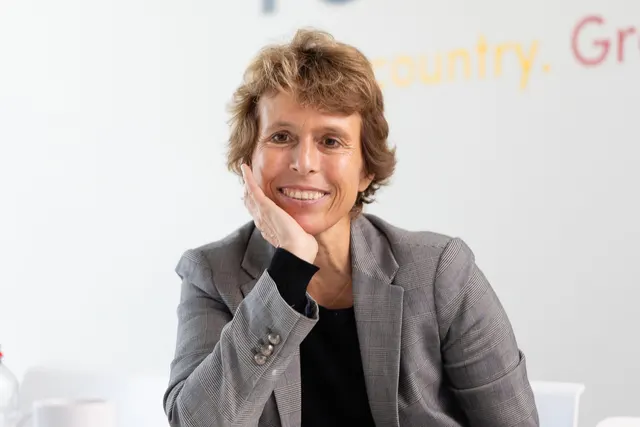
Jolyce Demely (Agoria Vlaanderen): “Link unemployment benefits to training for a shortage occupation”

“Using digitalisation and automation to fill shortage occupations is a good thing, but requiring the long-term unemployed to train for a shortage occupation should no longer be taboo either.” That is the view of Jolyce Demely, managing director of Agoria Vlaanderen, following the news that the list of shortage occupations has grown again.
The Flemish list of shortage occupations now includes 207 occupations, 17 more than last year. Flemish Minister for Employment Hilde Crevits announced this today. The list covers occupations for which employers find it harder to recruit suitable workers. Their number continues to grow, due to the overall tightness of the labour market, which is partly a result of the ageing population. In 2021, VDAB received more than 360,000 vacancies, twice as many as in 2020. Six in ten were for shortage occupations. At the same time, Flanders has the lowest number of jobseekers since 2008.
VDAB will now use a new digital tool and an expert team to visit companies with a large number of vacancies for shortage occupations. “That is a good thing, but requiring the long-term unemployed to train for a shortage occupation should no longer be taboo either,” says Jolyce Demely of Agoria Vlaanderen.
“The many unfilled vacancies are weighing on productivity in businesses and holding back the recovery of our economy. The current absence of workers due to coronavirus is increasing the pressure on our shortage economy even further, including after the easing of quarantine rules. In the short term, Minister Crevits is calling on students to sign up, but people without the right training are difficult to deploy. More than ever, I believe we should invest in the long-term unemployed by linking benefits to training for a shortage occupation of their choice.”
“A production line shut down, a production line running at half capacity… Our member companies also reported production stoppages last week. This is yet another symptom of a structural problem that is being exacerbated today. Having students fill vacancies is well-intentioned, but sadly will not deliver the hoped-for results because the required skills will not be a match. It is more important than ever to provide sustainable training for the workforce of the future, with a focus on the many shortage occupations. And the potential is there. This week, Steunpunt Werk published interesting figures on the potential within the Flemish working-age population: around 98,600 people are unemployed and available,” says Jolyce Demely.
Training as an activation requirement: train for a shortage occupation of your choice
“With the current proposal to grant unemployment benefits unconditionally, we lose out twice. First, costs will rise as the number of long-term unemployed claiming unemployment benefits continues to increase. Second, there is no guarantee that leaving a current job will lead to taking up a new one, since new skills and competencies are often required. Introducing conditional benefits would deliver two gains: it would reduce the number of unemployed people, bringing down the cost of unemployment benefits. Why not make the most of the shortage economy as an opportunity to activate people and thereby improve the combination of learning and working in the future?” asks Jolyce Demely.
Question about this story? Ask your question
Keep following this
Get an email when a new story is published. No account needed.
- ThemePeople make the food industry
- SubjectNews