Lockout/Tagout across multiple sites at a major drinks producer
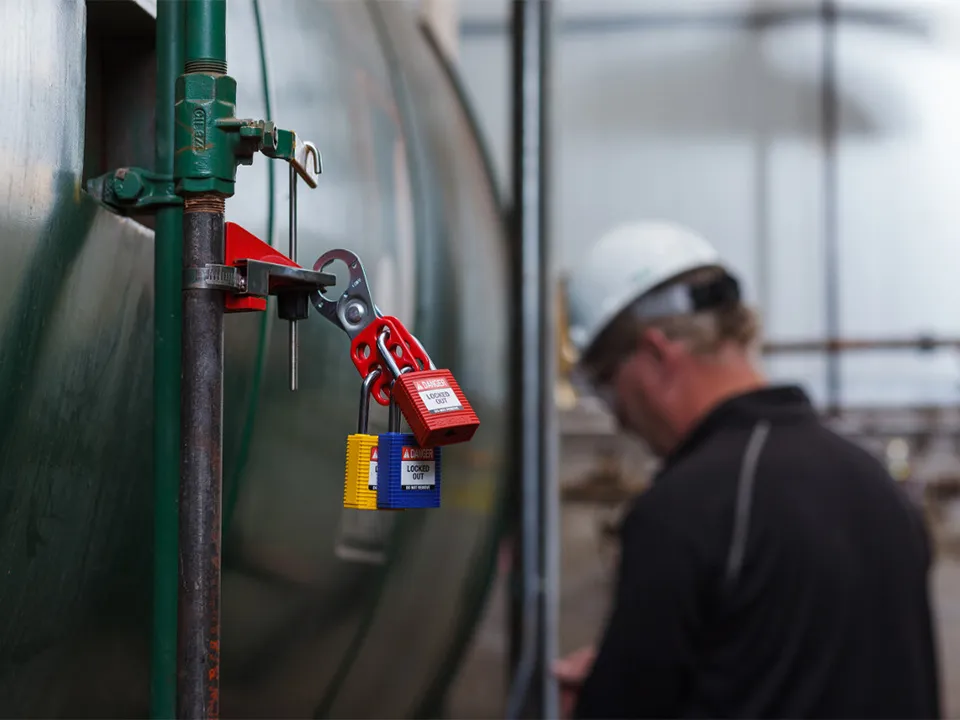
The drinks industry sometimes uses corrosive chemicals such as phosphoric acid and 4-methylimidazole. Hazardous or asphyxiating gases such as carbon dioxide and ozone may be present in complex pipework, as may other substances that pose chronic or acute health risks.
The use of chemicals at various stages of processing, as well as additives in both food and drinks, has increased significantly over recent decades, requiring maintenance procedures to be adapted.
In addition, mechanisation and robotics have increased significantly, leading to a growing number of large automated machines with many moving parts.
For maintenance and cleaning work, the contents of pipes must be removed and moving machine parts isolated to prevent workers from being exposed to hazardous substances or becoming trapped in powerful machinery. Machines are fitted with the necessary safety features wherever possible, but many machines used in this sector have hazardous moving parts for which the right safety features are not readily available.
To work safely, it is essential to switch off the power first, before touching even the smallest moving part of any machine. Operators are also advised to call on suitably qualified technicians if technical problems arise, rather than trying to solve them themselves.
Given the range of machines and pipes that require regular maintenance, drinks producers need several specialist teams and external partners, all equipped with the right tools to maintain the machinery safely.
Challenge
To improve safety during maintenance work, a large brewery with multiple sites is seeking a solution for isolating machines and securing energy sources and pipe valves in the off position. The customer wants to implement this solution at all its sites for a large number of teams, including specialist employees and external partners.
Solution
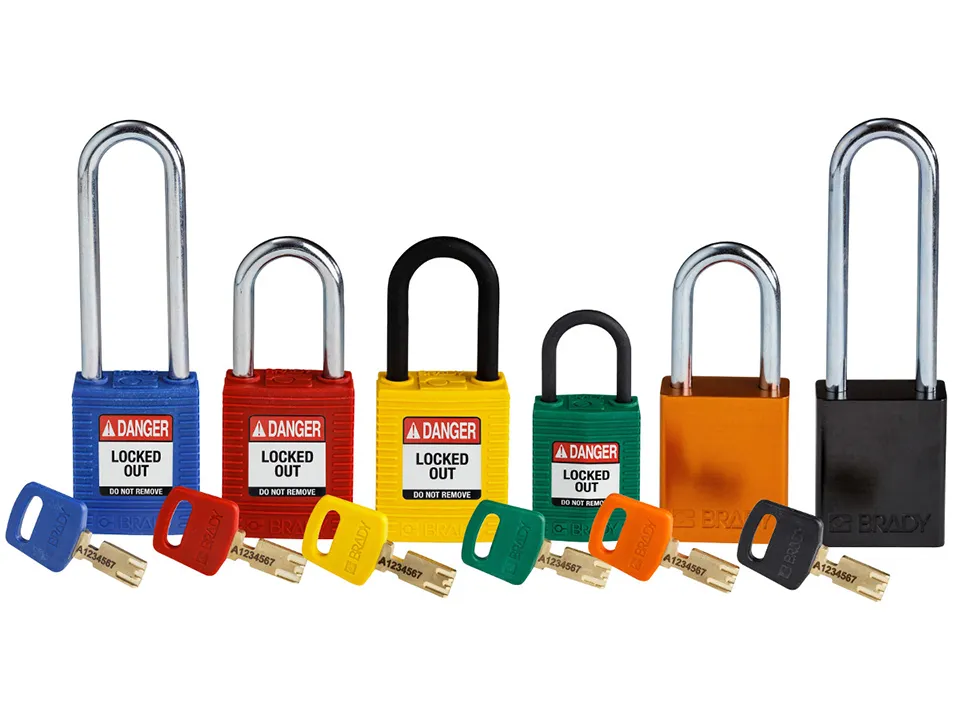
Brady proposes a complete Lockout/Tagout solution, with unique and innovative SafeKey padlocks as its key component, offering up to 700% more lock-and-key combinations than traditional safety padlocks.
SafeKey padlocks feature a unique and innovative locking mechanism that offers more than 100,000 lock-and-key combinations. SafeKey makes it possible to create larger sets of unique lock-and-key combinations, with grand master keys for more team leaders and a single master key for the company’s safety manager, which can open all lock-and-key combinations.
The golden rule of Lockout/Tagout, the proven safety procedure for all machine and maintenance interventions, is that the qualified person carrying out the work only removes their lock once the intervention is complete. This prevents energy sources and pipe valves from being reactivated prematurely, which could cause serious injury. Only team leaders and a select number of managers are authorised to reverse such decisions after extensive testing, as set out in the company’s safety procedures.
Brady can supply Keyed Alike locks to any employee who needs them. These padlocks cannot be opened by just any colleague in the company, but can be opened by the team leader with their grand master key or by the company’s safety manager with the master key. Thanks to the large number of lock-and-key combinations, we can equip dozens of teams with Keyed Different SafeKey padlocks, which can be opened with the grand master key held by their respective team leader.
Brady’s Lockout/Tagout experts can help draw up a comprehensive key plan listing all key and lock codes. This ensures that no two locks are ever identical, even when additional SafeKey padlocks are ordered.
Brady can also provide its LINK360 safety software, which enables relevant stakeholders at all sites to write, edit, approve and print machine-specific Lockout/Tagout procedures, or access them digitally.
Result
When specialist teams carry out work on a machine, team members can now take their safety into their own hands. They can fit a specific lockout device and secure it with their personal padlock to isolate an energy source or keep a pipe closed. They can also add their padlock to an existing lockout device if another team is already working in the area. This means they know that only they, their manager or the company’s safety manager can remove their lock to reopen a pipe or reactivate a machine.
Question about this story? Ask your question
Companies in this story
Keep following this
Get an email when a new story is published. No account needed.
- ThemeReliable machinery and drives
- SubjectNews
- CompanyBrady