Maintenance and asset management in 2030
Maintenance plays an important role in the performance, reliability and energy efficiency of production lines. Digitalisation is now providing us with new tools to move from maintenance to asset management. But what exactly does that mean, and what will maintenance look like in 2030?
Since 2020, the Internet of Things has been bigger than the conventional internet. This means that more sensors,
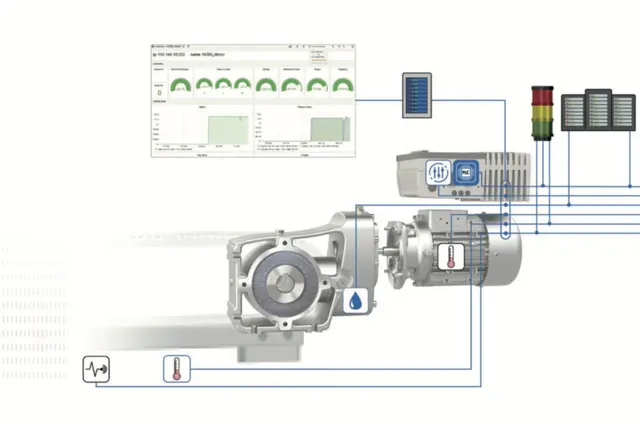
devices, objects, machines … are connected than there are computers and smartphones. This is a trend that is also taking place in industry. The global tipping point came in 2020, and by now around half of all industrial assets are connected. The reason is clear. We want to unlock data that we can then feed into smart algorithms, ultimately improving our OEE, helping operators work more efficiently, and reducing costs and energy consumption.
The main use cases for IIoT applications today all involve predicting maintenance needs. Predictive maintenance, in other words, but IIoT is also being explored as a way to improve the reliability of installations and optimise production processes. All of this is right up the maintenance team’s street. But what will this evolution actually mean for them on the shop floor? What will change in the way maintenance technicians work?
To get an idea, let’s take a look at an old-fashioned curve. The PF curve shows how an asset and its degradation evolve. It runs from the point of installation, through point P, when degradation of the asset becomes detectable, right through to component failure (F). First comes functional failure, when a pump no longer delivers sufficient flow, followed by catastrophic failure, when it completely tears itself apart. Many companies still let things go this far today. They only intervene when it is already too late. That is corrective maintenance, and although it may be a deliberate strategic choice, this way of working will become a thing of the past.
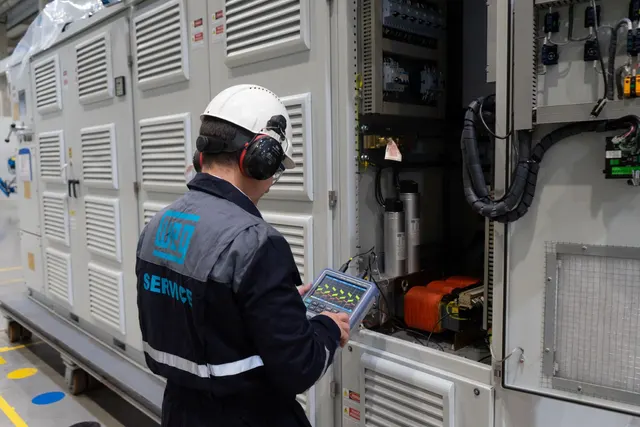
One step up, we find the preventive approach. Maintenance tasks are carried out at predetermined intervals. This will continue, but the shortage of technicians means we need to rethink how we approach it. These periodic tasks could be better entrusted to the machine operator, by equipping them with smart glasses that guide them through a few simple steps to achieve the desired result in no time. Technology can also help us move towards condition-based maintenance, where the tasks depend on how well our asset is still performing. Today, our maintenance technician has to go on site to inspect its condition. IIoT can digitalise this process.
To the extent that the famous point P, when we can detect degradation of the asset, shifts. That is a good thing, because it gives us more time to intervene, order the right spare parts and schedule a job. Maintenance then becomes precision work, carried out by skilled professionals who safeguard the reliability, costs and energy consumption of assets throughout their entire lifecycle. This requires expertise. Thanks to technology, the maintenance technician’s craft will once again be more highly valued. After all, technology is not there to monitor us, but to guide us towards a world without breakdowns.
Wim Vancauwenberghe
Director, BEMAS
Question about this story? Ask your question
Keep following this
Get an email when a new story is published. No account needed.
- ThemeReliable machinery and drives
- SubjectNews