New development becomes a landmark on Bruges’ skyline
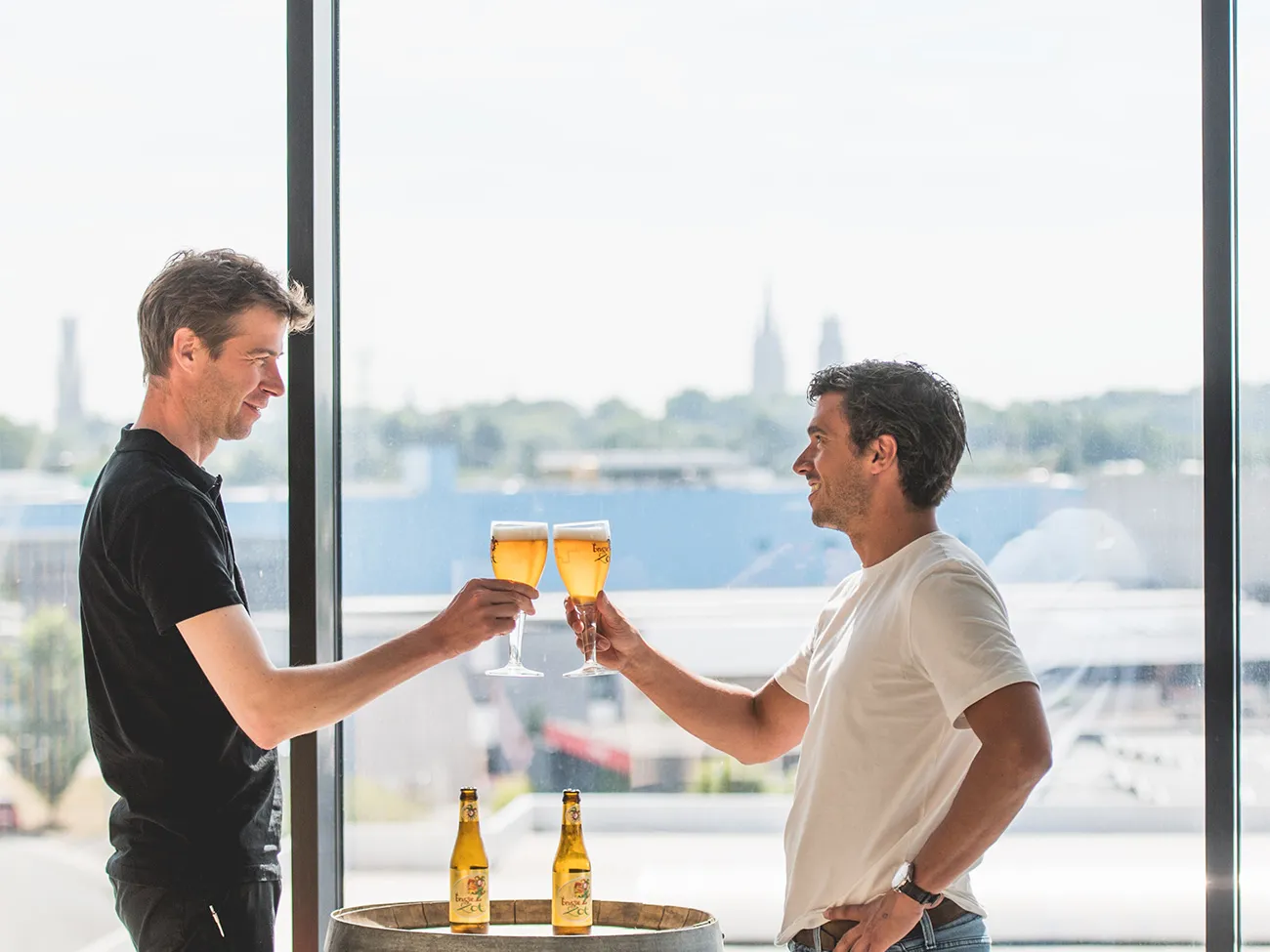
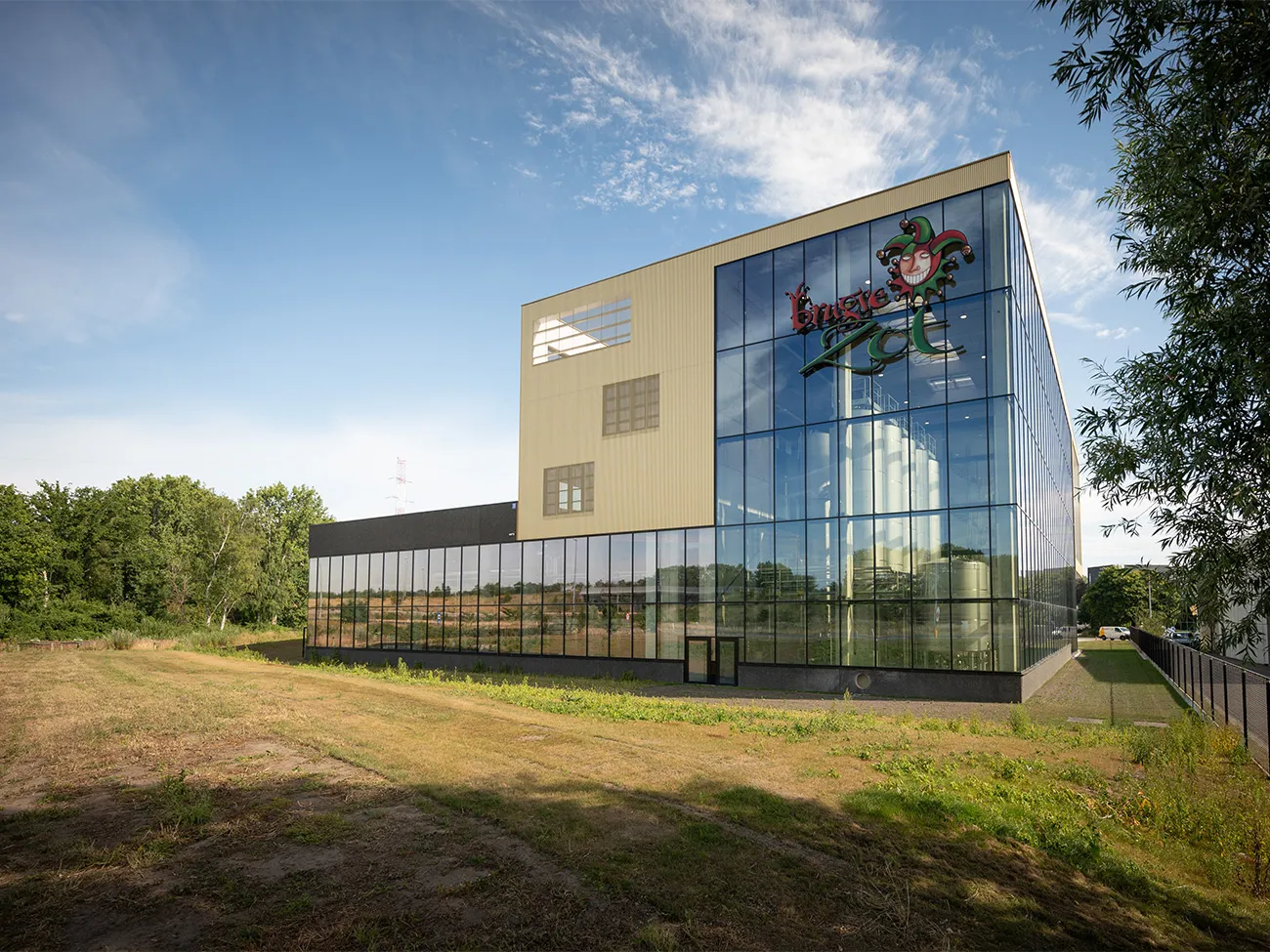
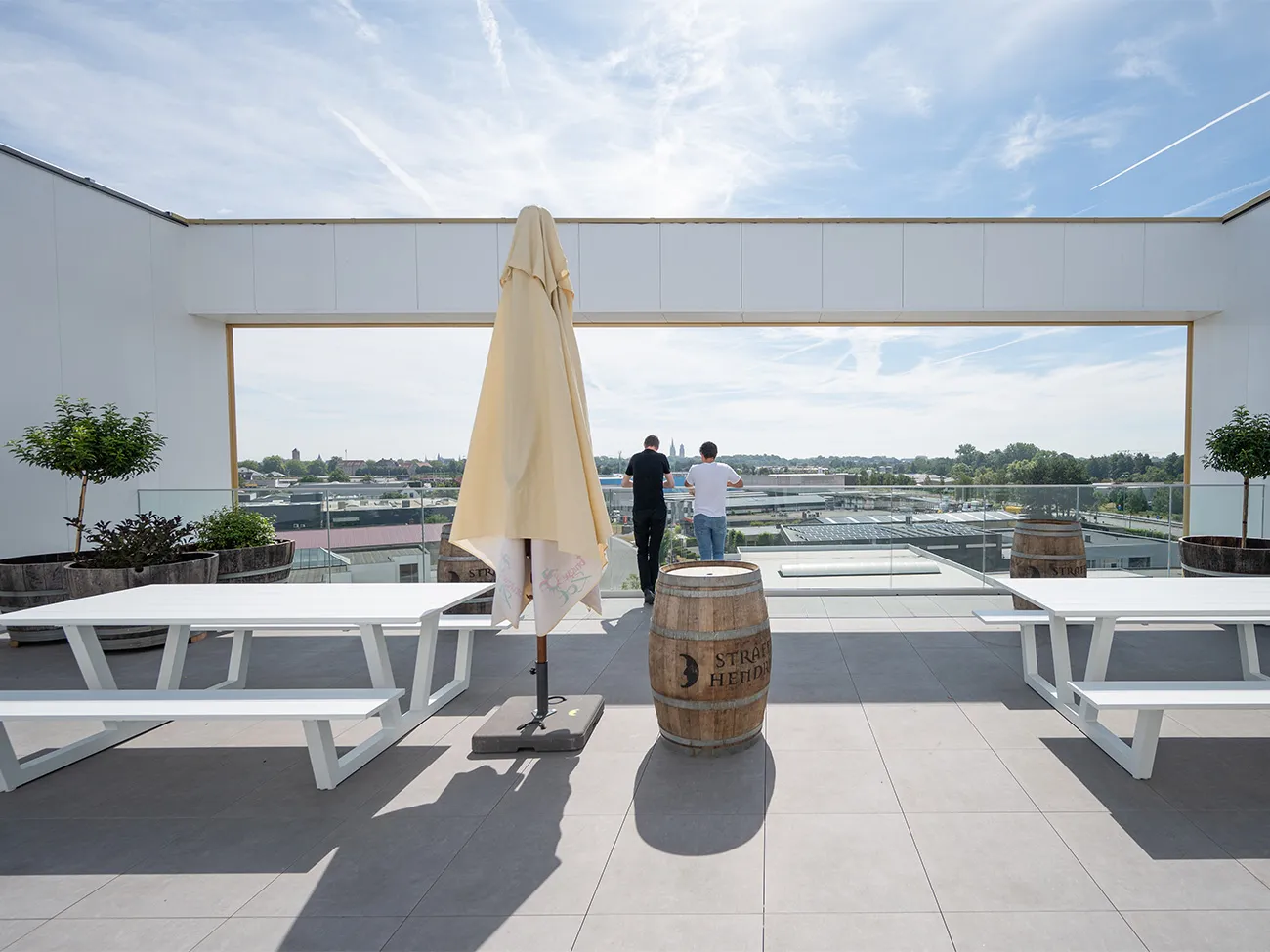
Belgian beers continue to perform well. The fastest-growing beers in the Benelux are those from city brewery De Halve Maan. To sustain that growth in the years ahead, a new building was needed. Space within the city walls was limited, but at the end of Bruges’ beer pipeline, the brewery found enough room to expand. A striking new building has recently risen above the Bruges skyline. It is a project by Beeuwsaert Construct, and a fine example of teamwork and flexibility.
In 2005, Xavier Vanneste, sixth generation of the brewing family, breathed new life into Brouwerij De Halve Maan with the launch of Brugse Zot. The brewery has been in existence since 1856. Its future was assured: this top-fermented beer was an immediate hit and continues to win over beer lovers at home and abroad. The brewery’s home base is right in the heart of Bruges, while its bottling plant has been located on an industrial estate on the outskirts of the city since 2010. “There was no room for further expansion there,” says Brewmaster Frederik Verstringe. “The calculated production capacity was 50,000 hl, but by then we were already producing more than 65,000 hl. We had simply outgrown the site.”
Creating a landmark
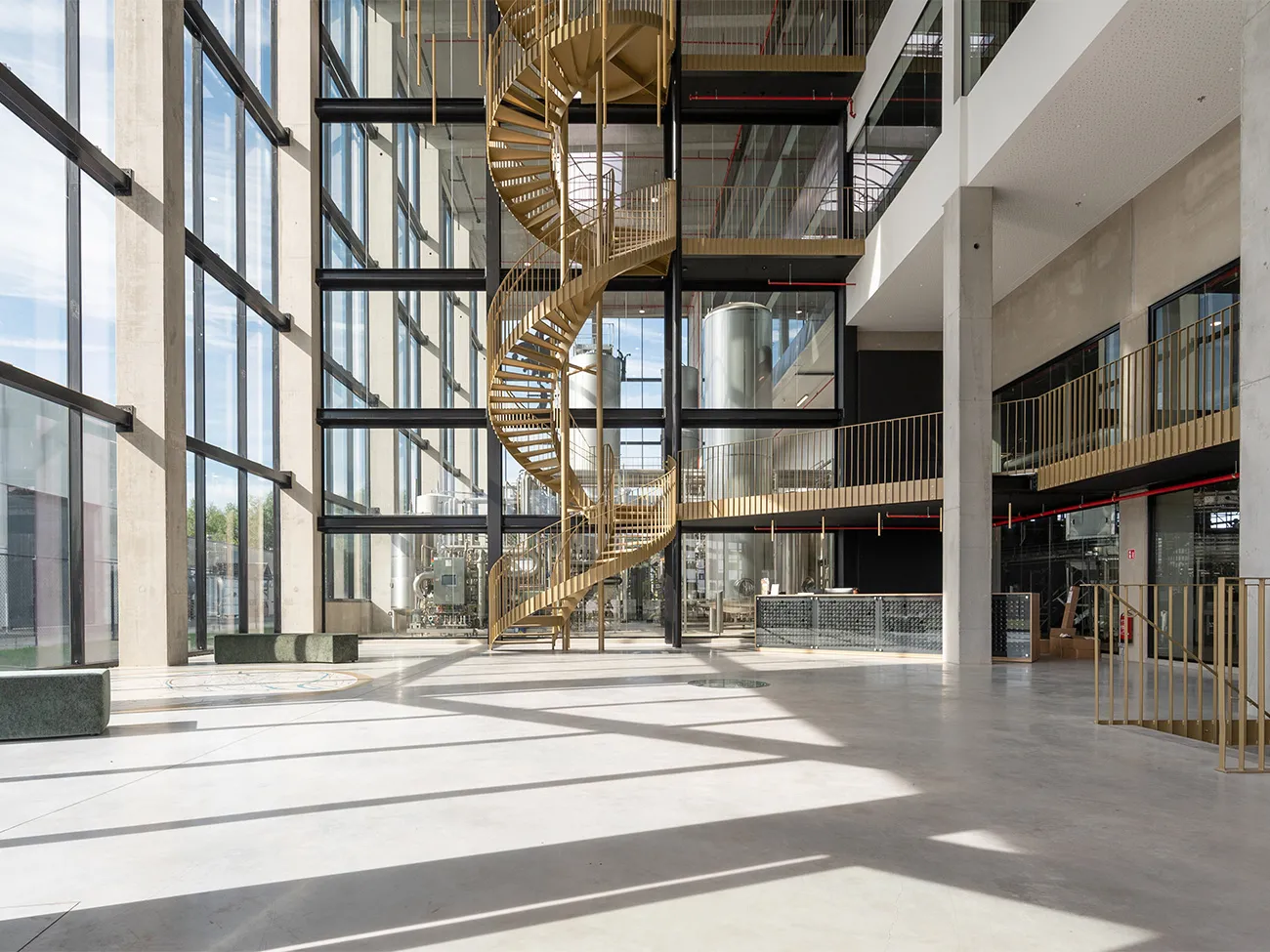
Although Brouwerij De Halve Maan is steeped in tradition, innovation is just as important. Since 2016, an underground beer pipeline measuring 3.3 km has connected the two sites. It was a bold but sustainable initiative, eliminating the need for heavy goods vehicles to enter the city centre. Verstringe: “We had the opportunity to buy the adjoining plots there, giving us the space we needed to expand our capacity further. However, we wanted to do more than put up an industrial building: we wanted to create a landmark that underlined our connection with the city of Bruges.” The landmark also has sustainability at its heart, and that means more than solar panels and water treatment. All process waste heat is put to good use elsewhere in the building.
Confidence in a successful outcome
An industrial giant with a green character, then. But building it was far from straightforward. Throughout the construction work, production activities and access for goods vehicles had to be maintained at all times.
That is why De Halve Maan entrusted the project to Beeuwsaert Construct, based in Ledegem. “Our architect had done his homework and drawn up a very detailed specification. The deciding factors were references, trust and price. We believed Beeuwsaert could bring the project to a successful conclusion with us,” Verstringe explains. Beeuwsaert was responsible for some of the demolition work, the entire shell, all structural work, the office fit-out and building services. Work began at the end of 2019. At the time this article went to press, the final details were being completed to the client’s great satisfaction.
Working around production
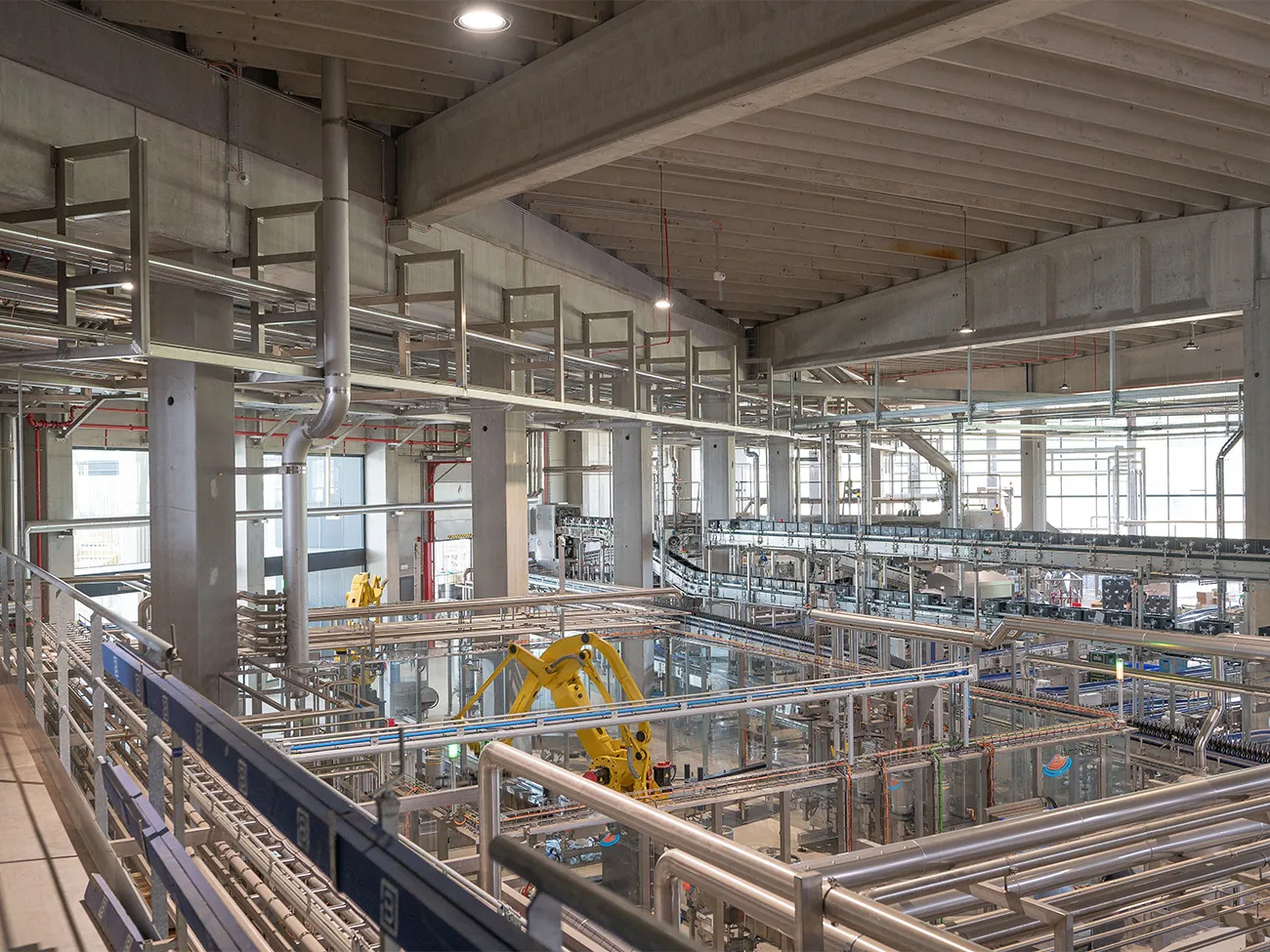
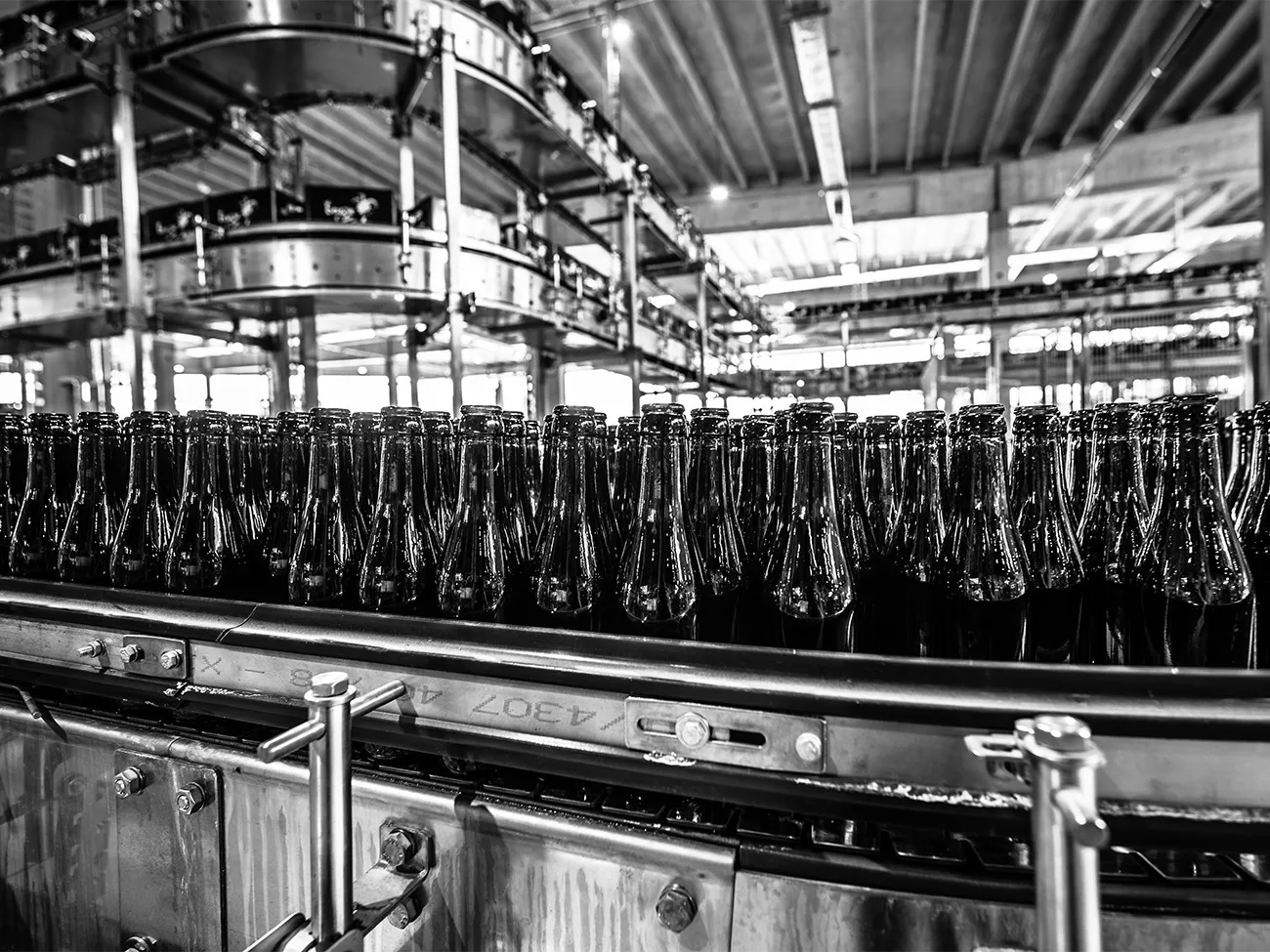
There was no shortage of challenges for the industrial construction specialist. Verstringe: “The production area was the absolute priority. This expansion will triple our production capacity, while the floor area will increase tenfold. But the building was designed as an integrated whole. That is what gives it the iconic appearance we are so proud of today, but it made things very difficult for the contractor.” Beeuwsaert could not simply build up from ground level, but often had to work above brand-new equipment. Whenever equipment was delivered, the space it was going into had to be wind- and watertight and structurally stable enough. At the same time, the machinery manufacturer supplying the installations imposed very tight deadlines. The construction itself was also far from routine. The 20 m-high service shaft was delivered to the site as a prefabricated unit. A 23 m steel beam was also required, weighing 54 tonnes, the heaviest ever made for Beeuwsaert’s in-house steel production.
A fine example of teamwork
“Beeuwsaert had to factor the move into its shell construction schedule. We agreed which elements would and would not be built before the move. These are things that, however thoroughly you prepare, you cannot predict with complete certainty. But they constantly took our production needs into account.” Communication was therefore the key to success on this project. “A fine example of teamwork,” Verstringe sums up. “Project manager Mathias Despriet and I were in constant contact. A site of this scale stands or falls on the project manager and their team. Throughout the entire project, I only needed one point of contact to get an update. At every stage, he and Beeuwsaert proved to be a flexible partner, continuing to work with us to find solutions.”
Question about this story? Ask your question
Companies in this story
Keep following this
Get an email when a new story is published. No account needed.
- SubjectNews
- CompanyBeeuwsaert Construct