Roadmap in focus: The food factory of the future
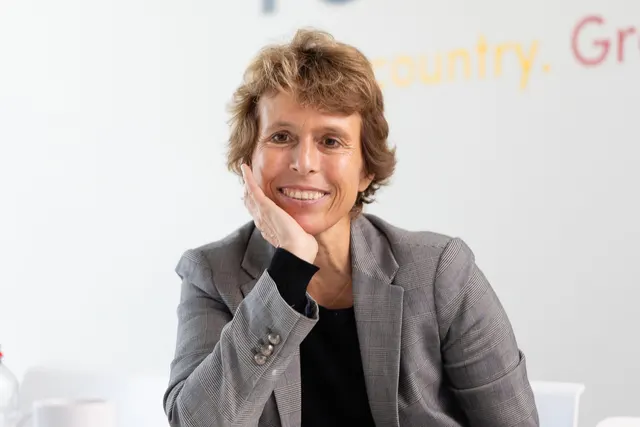
Veerle De Graef, program manager at Flanders Food, explains the roadmap ‘Towards the food factory of the future’
Why are we looking towards the food factory of the future?
Food companies must continue to innovate and respond flexibly to a changing world, where agility and competitiveness are essential. This is the only way they can remain competitive and respond even more effectively to changing consumer and market demands. This could mean a more efficient or sustainable production process, or finding ways to produce affordably on a small scale to meet consumer demand. The raw materials and energy crisis that companies are currently struggling through also requires considerable agility from food businesses, while product quality must always remain the top priority.
How was this roadmap developed to support food companies?
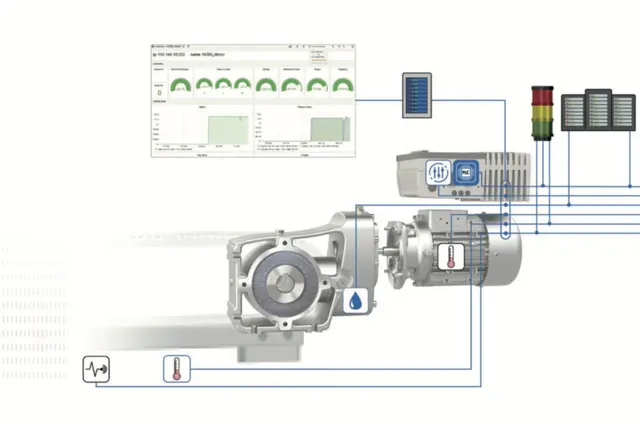
When developing this roadmap, we decided to focus on four transformations of the food factory of the future: striving for a smart factory, digitising the factory, putting people at the heart of production, and making raw materials, energy and water circular. The 2008 project Intelligence for Food was the first project to explore the potential applications of sensors in the food industry, and it laid the foundations for this roadmap. Later projects, Sensors for Food and i-Fast, broadened the focus to sensor integration and data analysis. A sensor gives you one number, but all those numbers ultimately need to be brought together, analysed and understood so that the right actions can be taken. Digitisation can also lead to the automation of processes using artificial intelligence, or to robots and cobots taking over dull, dirty and sometimes unsafe tasks from people. By reducing workloads, we hope to make jobs more attractive too.
Are digitisation and automation investments only accessible to large companies?
No, certainly not. Companies have now realised that they need to embrace these transformations to remain competitive. Much depends on a company’s strategic vision. SMEs can also be pioneers in this area, and at Flanders’ FOOD we aim to guide them, including through their participation in our COOCK projects. For example, the Digitrack project assesses how far companies have progressed on their digitisation journey, advises them on the steps they can take and supports them with the Digiscan tool. The AI Pathfinder project takes this a step further. It looks at which digital investments are best suited to a company and whether digitisation is actually the solution to the problem. We then work with partners such as Sirris, imec and test beds such as VEG-i-TEC to draw up a practical roadmap to guide companies. This helps both large companies and SMEs avoid taking steps that they later realise were the wrong ones.
The collaboration with various partners suggests that working together will be essential to achieving the food factory of the future?
That is certainly right! Many food companies work with research institutions, digital technology providers, other food companies or machine manufacturers to develop innovations as part of this roadmap. These collaborations can take place within a linear value chain, for example between a supplier, processor and customer, as in the CHAIN project. Other projects, such as Autoprocess and iMeat, support collaboration between different food companies. Although they are competitors, they are willing to share knowledge and insights on digitisation, helping them to strengthen one another. Through the S3 Smart Sensor 4 Agri-food partnership, the S3FOOD and Connsensys projects, and the recently launched HIGHFIVE, we have extended this type of collaboration to European level.
Several years have now passed. Have there been any updates to the roadmap?
The original focus on sensors remains very important and relevant to companies. However, the next step, what happens to the data collected, is becoming increasingly important and attracting growing interest. People often say ‘data is the new oil’ to emphasise the importance of data. The roadmap is therefore currently being refined to incorporate the different aspects of data management. Data management can enable connectivity between machines, departments and even across the value chain. This can increase not only operational efficiency, but also traceability throughout the value chain. Data can also be used to control automated processes or support operators, as in the Operator 4.0 project. Sensors and the central role of people both remain important. In recent years, climate change and the recent raw materials and energy crisis have driven such strong interest in the circular use of raw materials, energy and water that a separate roadmap is being developed to address this.
One final question: this roadmap was developed as a strategy for the future. How do you see it evolving?
In recent years, we have seen a significant increase in people’s digital awareness. Companies are also being encouraged by the green transition to focus on sustainable production and more efficient processes. As a result, they are increasingly taking steps towards digital transformation to optimise several areas. This naturally opens the door to new challenges, such as cybersecurity and data ownership. We also continue to see interest in innovative sensors that can provide greater insight into specific processes. Fortunately, at Flanders’ FOOD we see it as essential to turn every challenge into an opportunity for food companies.
Question about this story? Ask your question
Keep following this
Get an email when a new story is published. No account needed.
- ThemeBuilding and upgrading food factories
- SubjectNews