The Fourth Industrial Revolution shifts up a gear with (Gen)AI technology

The Fourth Industrial Revolution is accelerating worldwide as connected smart machines, AI and data applications, and cyber-physical production systems reach a high level of technological maturity. The technologies shaping the factory of the future are now available for large-scale roll-out. Generative AI adds new possibilities for product development and further automation of the production workflow.
Annual revenue growth in the US manufacturing industry stagnated at around 1.4% over the past twenty years. Over the past five years, however, US manufacturers have significantly increased productivity. According to Mckinsey, total shareholder returns in manufacturing are around 400 basis points higher than in the previous fifteen years. The boost to manufacturing is the result of policy measures encouraging the reshoring of industry to the US, including the production of semiconductors and renewable energy technologies.
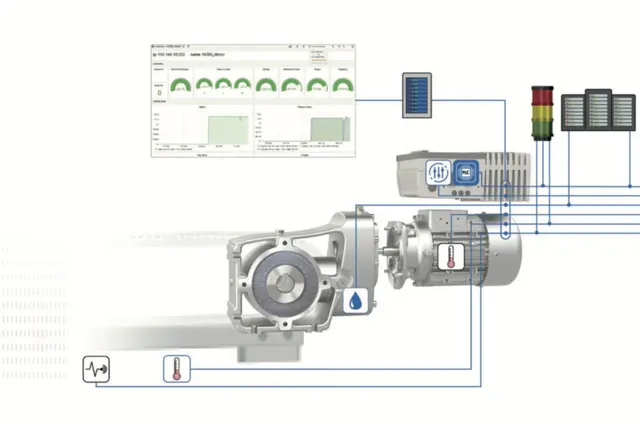
A second key factor behind the increase in productivity is the technological maturity of digital solutions and digitally driven cyber-physical production systems. Smart, connected machines equipped with a range of sensors, predictive maintenance solutions, and various AI and data applications are taking efficiency and automation to new heights. The Fourth Industrial Revolution is at a turning point. GenAI applications and copilots deliver significant added value, both in product development and in production processes.
GenAI tools draw insights from far more diverse data sources than people can analyse alone. This enables industrial designers to build a much richer knowledge base and generate many more design variations. Text-to-image GenAI tools offer huge potential for inspiration and innovation. Product design cycles can be shortened by as much as 70%. The knowledge and experience of design experts nevertheless remain crucial for assessing whether designs are manufacturable and aesthetically pleasing. Streamlined collaboration between people and tools will ultimately determine whether the resulting design appeals to users, can be manufactured effectively and is also more environmentally friendly.
A second area of application is supporting machine operators and plant engineers. GenAI functionality can be developed at machine level or at system or workflow level. GenAI boosts the efficiency of hands-on tasks such as programming machines. Instead of programming PLCs manually, a GenAI tool can generate code through text prompting, much like GenAI support for software development. Based on historical data, GenAI can generate action plans for systems engineers, with step-by-step instructions. Such GenAI action plans for machine faults can include an analysis of the faults, the replacement parts needed and even a list of potential suppliers. GenAI tools are particularly useful for generating all kinds of technical documentation and manuals in different languages. ISO standards and CE compliance often require extensive documentation, for which GenAI is an excellent tool.
Every manufacturing company can already start using GenAI tools in virtually every area of its operations. And this is only the beginning. Researchers and high-tech companies are currently developing GenAI solutions that enable machines and robots to interact naturally with people, adapt to new environments and learn from their own mistakes. Work is under way on generative AI Robotics Foundation Models (RFMs), which will make the use of smart, multimodal robots and cobots a reality. The physical and digital worlds are becoming fully intertwined.
In any case, the key is to ride this unprecedented wave of technology in time, starting today. We need to research, experiment with and test GenAI technology today so that we do not miss the boat tomorrow and watch the competition race ahead. For employees. For companies. And for our country.
Danny Godderis
Senior Business Group Leader Telecom at Agoria
Question about this story? Ask your question
Keep following this
Get an email when a new story is published. No account needed.
- SubjectNews