Turning blood into drinking water cuts water use by 40%
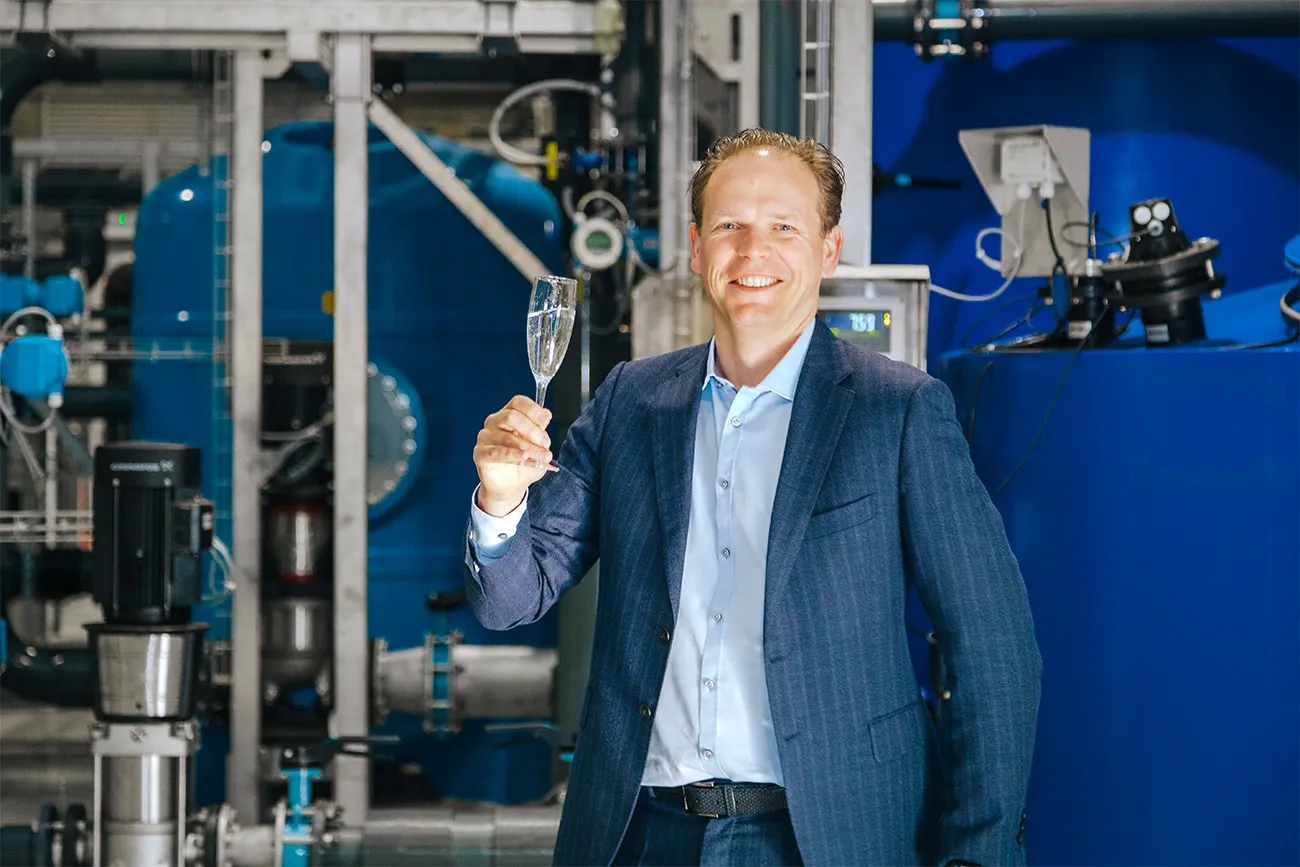
They knew how to turn water into wine more than 2,000 years ago. But turning blood back into drinking water proved less straightforward. That is, until Veos achieved a world first in May this year. The company, based in Zwevezele, combined proven technologies and filtration techniques to create a unique system that can treat its wastewater to drinking-water quality. This saves 45 million litres of water a year.
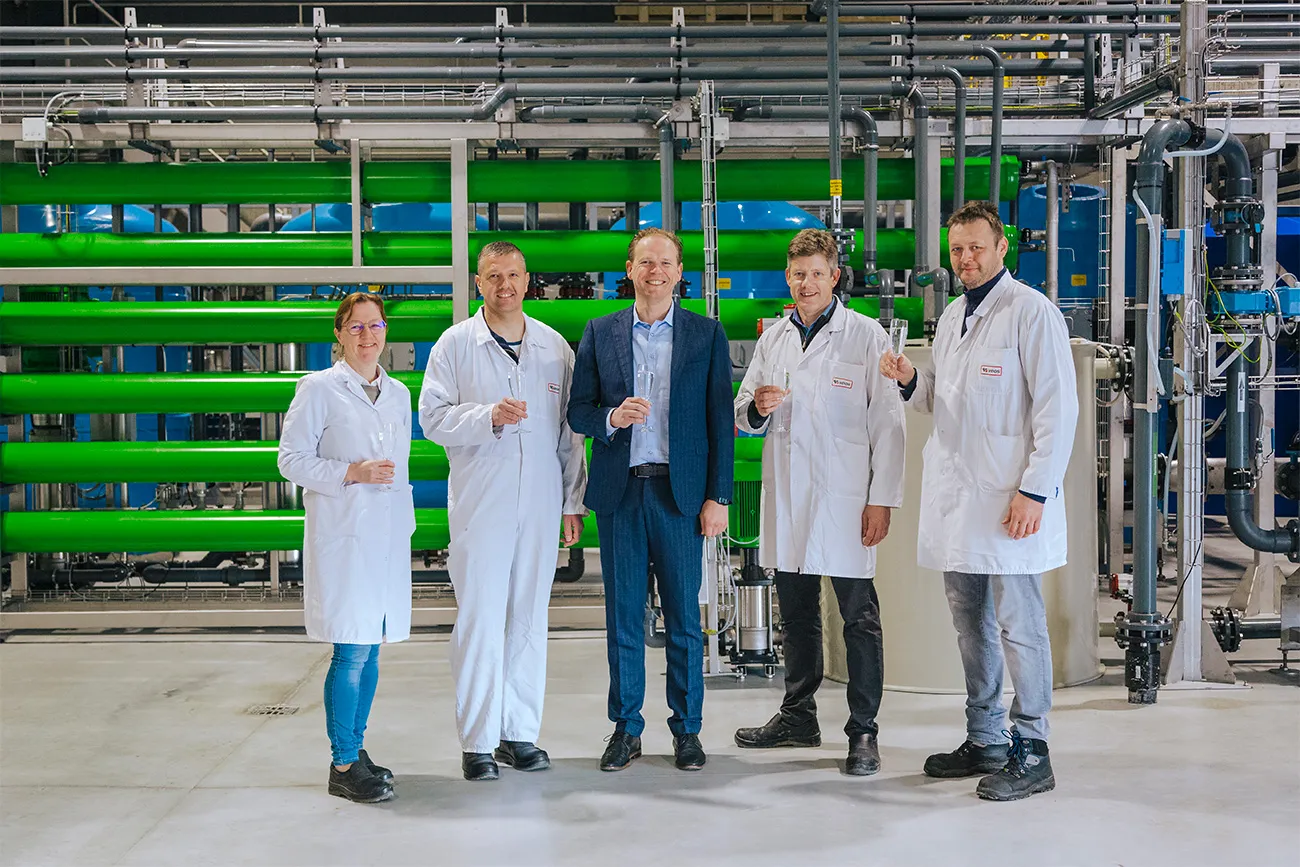
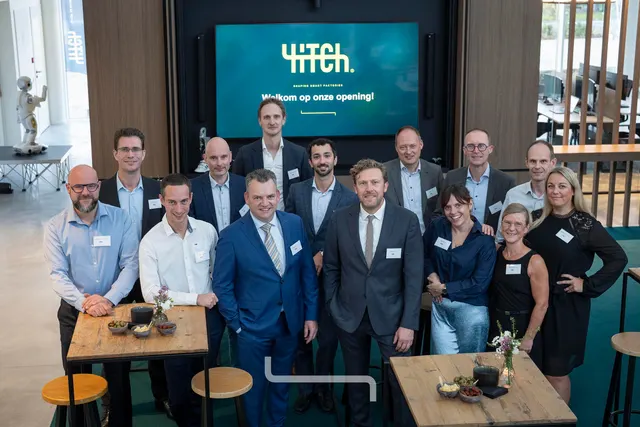
Carl Decaluwé, Governor of West Flanders, officially opened the facility. This was no coincidence, as the governor has an important role to play in addressing water scarcity and drought. “While Flanders has enough water, unfortunately too much is still lost, leaving us facing problems during periods of peak demand. We therefore need to move towards a water policy that limits demand as much as possible while also drawing on a wider supply by reusing water in different ways. I think Veos’s innovation can serve as an inspiration, with an impact well beyond our provincial borders. So, just this once, let’s set aside our West Flemish modesty, because what is happening here is world-class.”
Processing with as little environmental impact as possible
CEO Robert Slee: “My father Michael started the company in ’74 to help deal with the surplus of blood at the time and put it to good use. In other words, to recover and add value to raw materials. Circularity has always been in our blood. We extract high-quality functional proteins from pig and cattle hides and blood, and process them for human and animal consumption.” Veos now has twelve production sites and 240 production plants, with a presence in 87 countries. It is a success story. “Blood is not an easy product to handle, though, so for years we have done everything we can to ensure that processing has as little impact as possible on the environment, energy use and water use. This includes using heat exchangers and solar panels,” Slee explains.
Tackling water use
Even so, production still required a great deal of water to clean the tanks used to store animal blood. “To strengthen our sustainability ambitions and maintain groundwater levels, we looked for an alternative that would allow us to pump less water while still ensuring enough supply for production expansion,” says Slee. For a year and a half, the R&D team explored how to bring the wastewater back to drinking-water quality. “During production, we concentrate the blood and then dry it under vacuum at a later stage. Water vapour is released from the blood during this process. We condense it back into water. The new water treatment plant will now purify that water so it can be reused in the production process.”
Three additional filtration stages
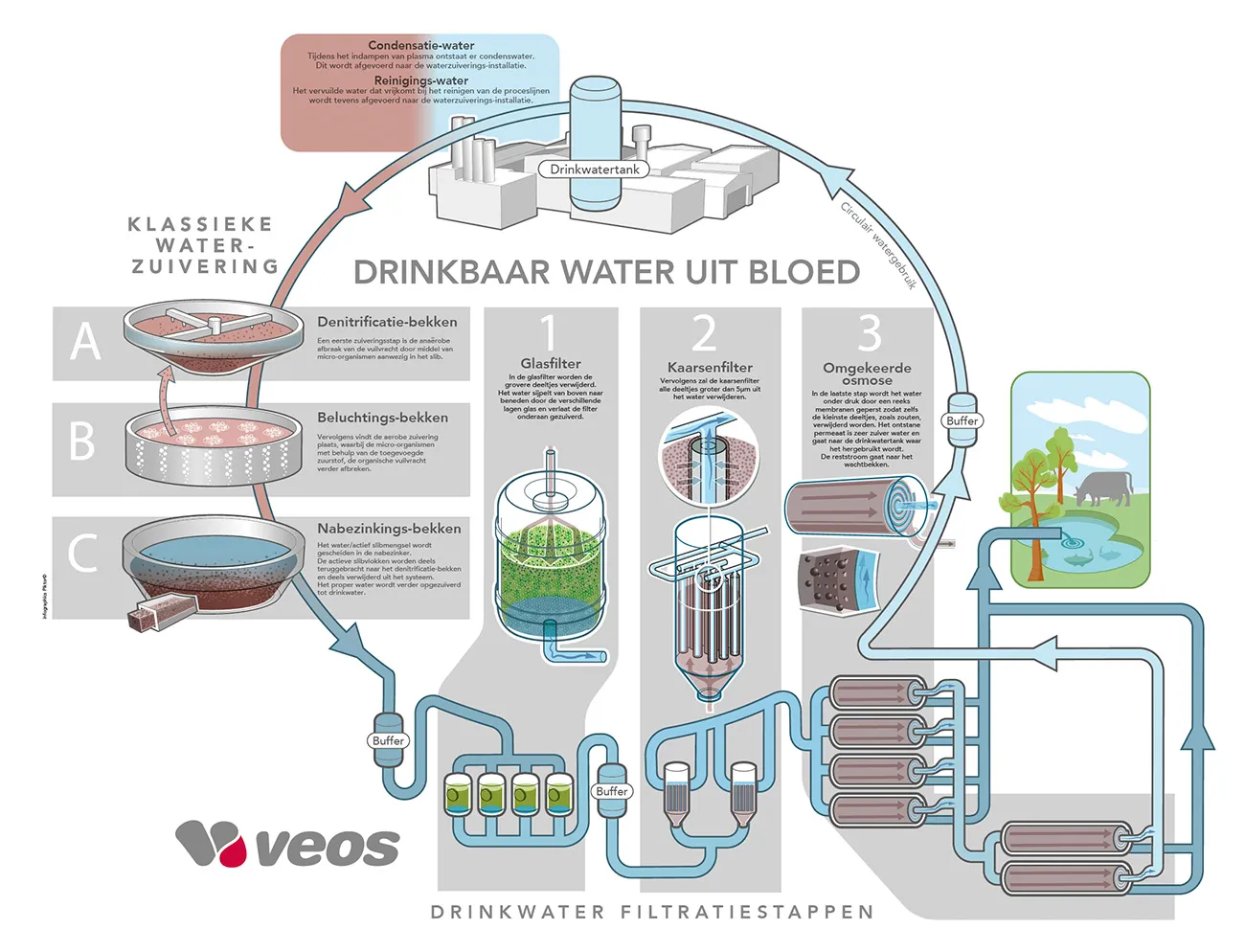
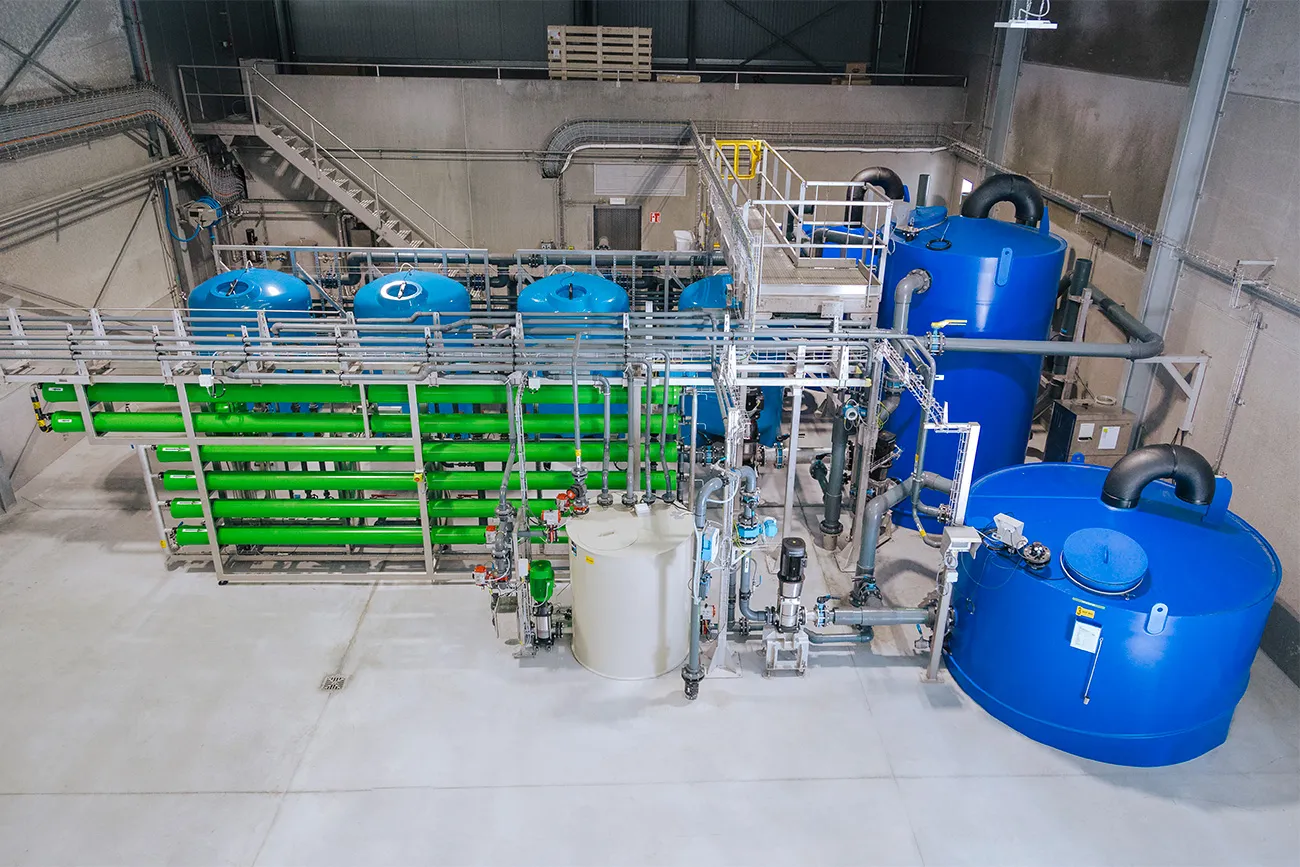
Veos achieves this by adding three filtration stages to its conventional water treatment plant, which consists of three tanks (denitrification, aeration and secondary settling). Chief Operating Officer Sam Deschoemacker explains how it works: “Wastewater from the secondary settling tank passes first through a glass filter and then a cartridge filter. The aim is to remove as many suspended particles as possible and prepare the water for the final stage: reverse osmosis. Here, the water is forced under high pressure through a membrane to remove the remaining impurities.” This means Veos has to pump 150,000 litres less water each day. “Over a year, this saves the equivalent of the amount of water used by 1,000 households,” adds Deschoemacker.
Rolling it out step by step
A remarkable example of West Flemish high-tech engineering. “In fact, we haven’t invented anything new. These filtration techniques have already proven themselves in other applications. What we did was combine them and fine-tune them to create a plant that can respond perfectly to fluctuations in the process. That was the challenge. The plan is now to roll out this investment in a circular production process step by step at our other production sites, significantly reducing water use there too,” Deschoemacker concludes.
Question about this story? Ask your question
Keep following this
Get an email when a new story is published. No account needed.
- SubjectNews