Why compressed air quality needs more attention
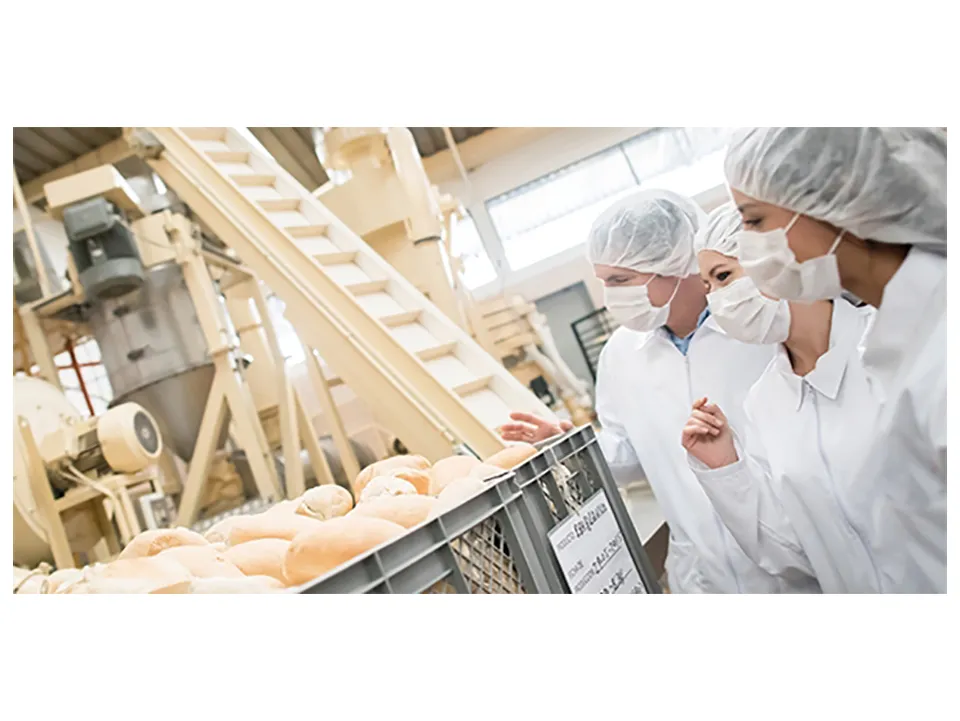
Many processes rely on compressed air to operate effectively, including in the food industry.
Even when it is not injected directly into a product to make it light and airy, used to apply icing, for example, or employed to blow food products clean, it is at least used to transport products, inflate packaging or clean surfaces. In these ways, compressed air ultimately comes into contact with food. And that is far from as harmless as it may seem, even when you comply with hygiene standards.
Text Elise Noyez | Image BEKO TECHNOLOGIES
The basic principle of compressed air is simple: air is drawn in from the surrounding environment and compressed using a compressor. This also means, however, that all the contaminants and bacteria present in the intake air, and there can be quite a lot of them, become concentrated in the compressed air. Substances that are relatively harmless under normal circumstances can therefore be compressed to concentrations that are sometimes problematic. If they then end up on or in food, there is a risk of contamination.
Three risk factors
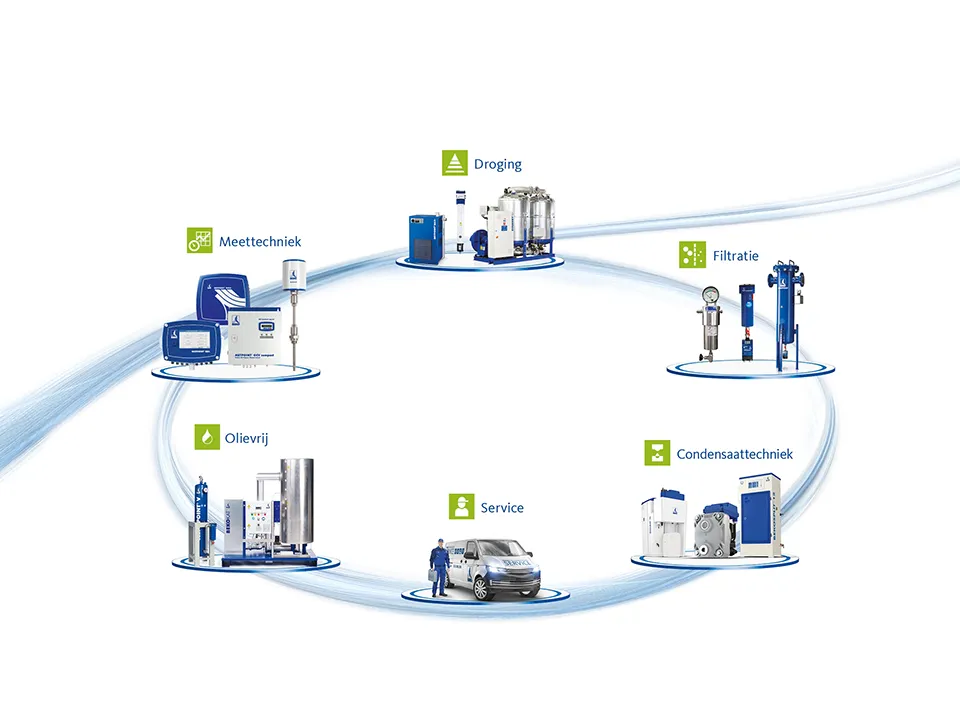
Compressed air treatment aims to limit the risk of contamination. This generally involves addressing the three main risk factors for bacterial growth and development: moisture, dust and oil. In other words, the use of dryers, filters and activated carbon filtration forms the basis of compressed air treatment. There are, however, significant differences in performance. A conventional refrigerated air dryer, for example, reduces the moisture content of compressed air to 6 g/m³, while membrane dryers and adsorption dryers perform considerably better, with residual moisture levels of 0.4 g/m³ and 0.1 g/m³ respectively. It is also important to note that the compressed air treatment methods described above never remove bacteria from compressed air completely. Only a catalyst can do that.
Between regulation and reputation
Food companies primarily rely on various hygiene standards and guidelines when determining how to treat compressed air. Provisions on this subject are included in BRC8, FSSC220000 and IFS, among others. That should be enough, surely? Unfortunately not. In reality, most standards are vague and inadequate. They mention the need for compressed air treatment and quality control, but contain no specific requirements on filtration, drying and monitoring methods, or the quality parameters to be achieved. As a result, systems are approved almost daily in practice even though the compressed air quality is inadequate, or at the very least unknown. This can ultimately prove costly for food companies. Contamination will not be detected on the production line, but if problems arise in the field, infections may be traced back to the compressed air. Companies will then face not only the costs of identifying and eliminating the source, but also enormous reputational damage. That is a good reason to invest in optimal, traceable compressed air quality.

Traceability at every stage
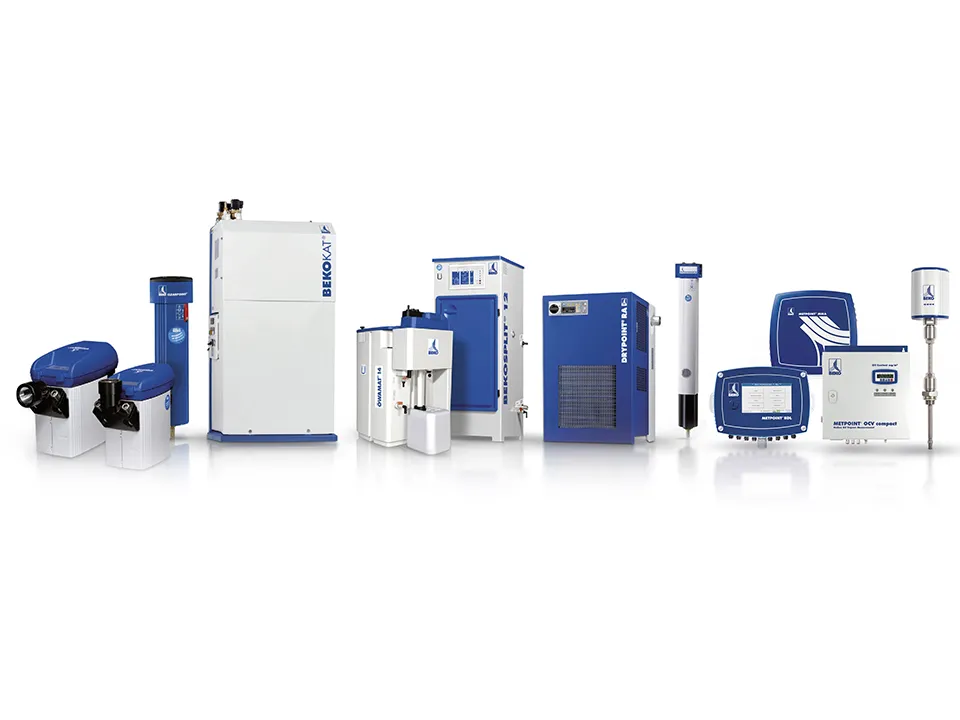
Compressed air treatment specialist BEKO TECHNOLOGIES consistently bases its work on the parameters and classifications set out in ISO 8573-1:2010. This standard defines different quality classes based on the size and quantity of particles, and the moisture and oil content of compressed air. For compressed air that comes into direct contact with food, BEKO TECHNOLOGIES recommends the highest quality class for particles and oil content, and the second-highest class for moisture content. To achieve this, it can put together complete treatment systems, upgrade an existing installation or provide advice. This is only possible, however, if the compressed air quality is actually known. In addition to carrying out air quality audits, regular, or preferably continuous, monitoring of dust, dew point and residual oil vapour is therefore recommended. This makes it possible to verify the actual compressed air quality at any time, and gives this production process traceability too. This is essential for a safe product.
Question about this story? Ask your question
Companies in this story

Keep following this
Get an email when a new story is published. No account needed.
- SubjectNews
- CompanyBeko Technologies