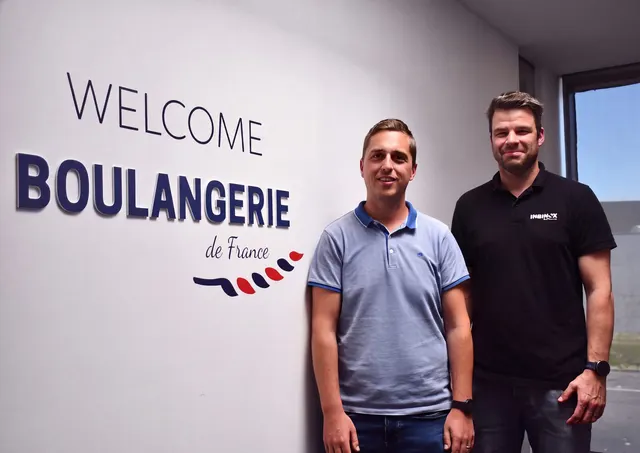
Workwear: always spotless, always sustainable
Text and images Valérie Couplez
In the food industry, it is not only your machines that must be cleaned to perfection. The same goes for your employees' clothing. Yet that need not be a pure cost. By bringing in a professional partner such as Klaratex, you will gain in both efficiency and sustainability. The industrial laundry from Wevelgem does everything it can to take the burden off its customers' hands, and keeps investing in its own processes to support food companies even better.
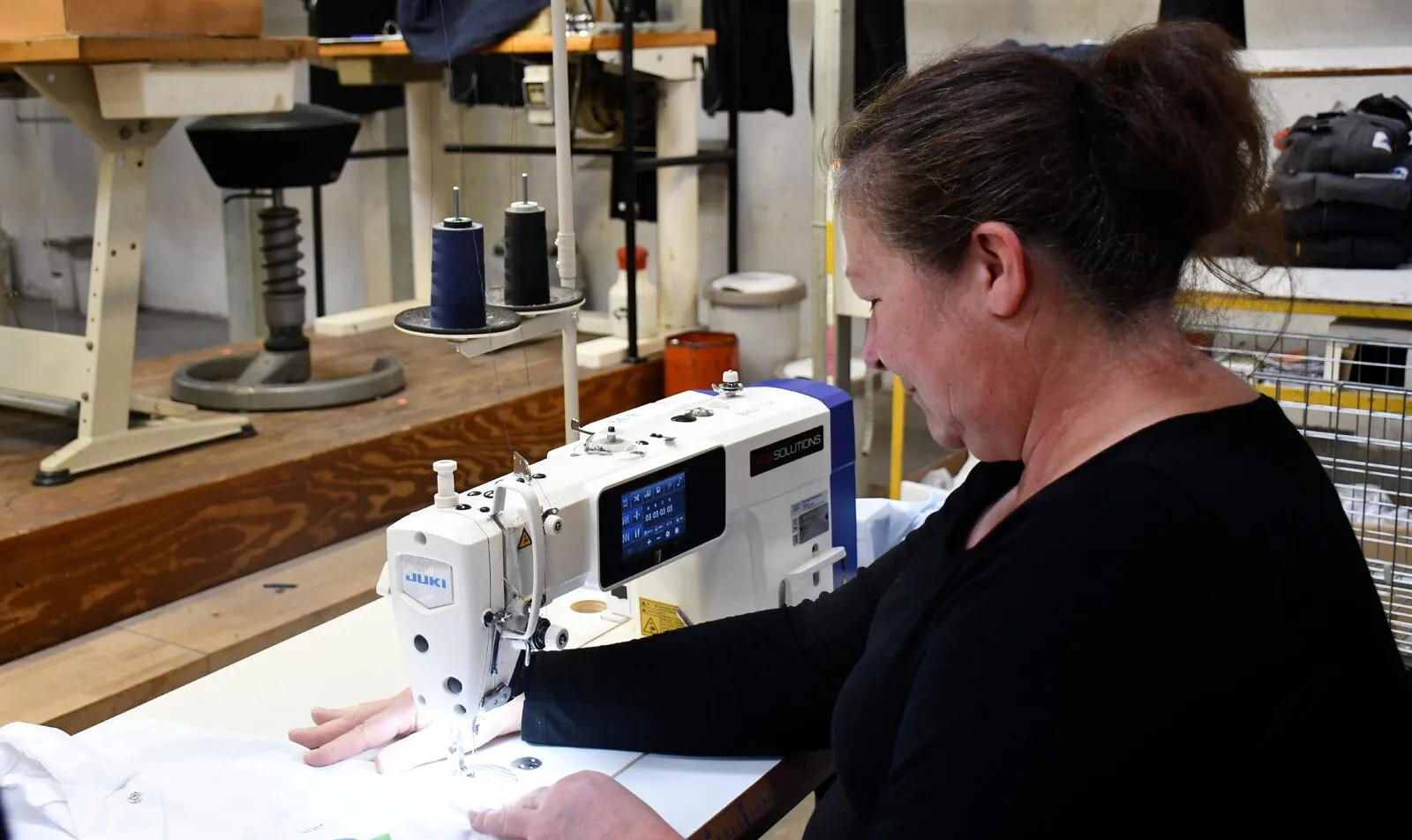
Clean workwear is indispensable for the food sector: it is a hygiene necessity, but also because your staff like to look well turned out. More and more food companies are turning to a professional partner for this. It lowers operating costs, saves time so that your employees can focus on their core tasks, and guarantees that the clothing always meets the strictest hygiene and safety standards. Klaratex does this in the most sustainable way: by minimising water consumption, maximising recovery and optimising purification. It also focuses on repairs, so that garments become truly circular. "We recently bought a new sewing machine. Sewing remains a craft, but we do try to support our employees as well as possible with the right technology," says managing director Karel Dermaux.
Preparing for the future
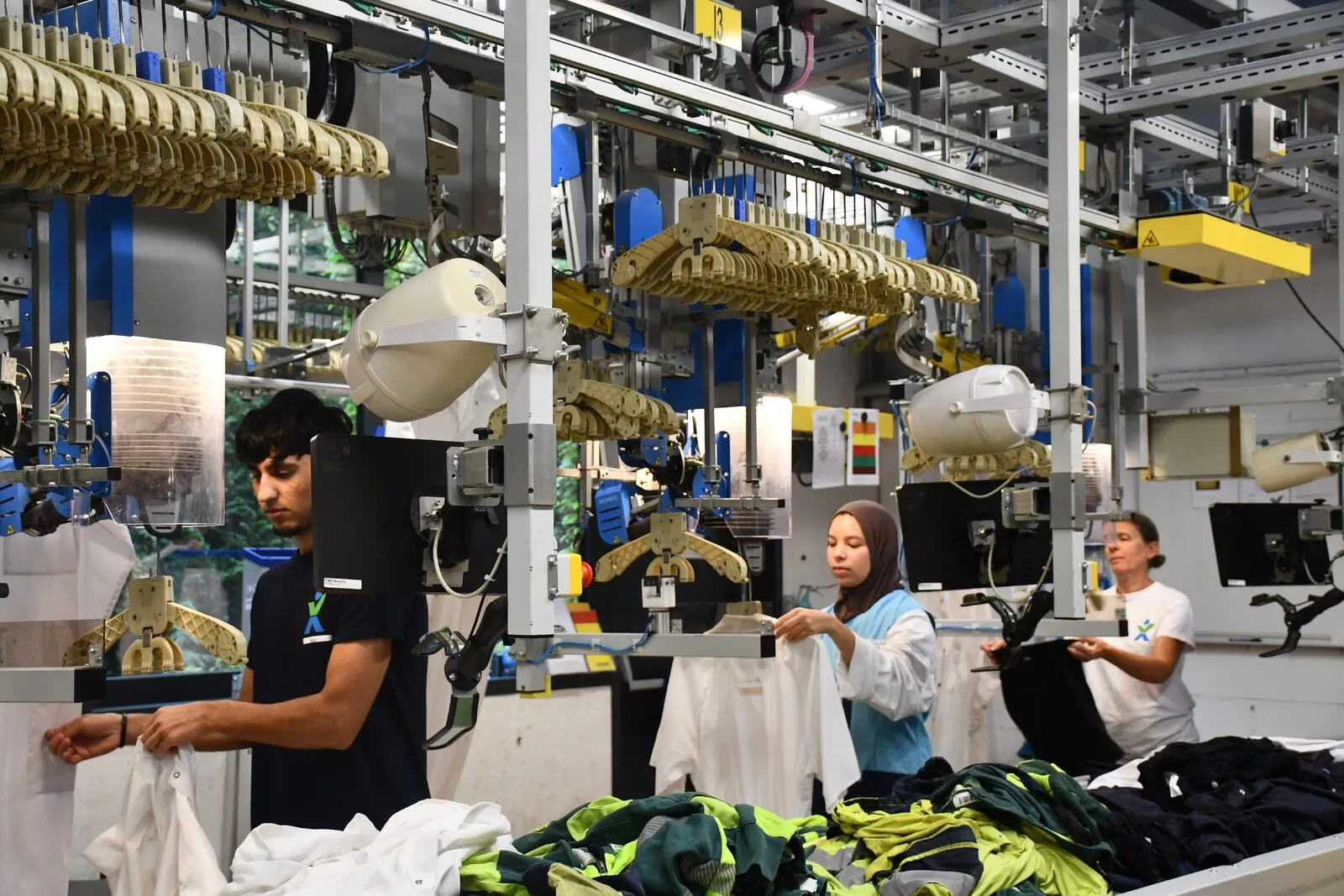
Over the past few years, there has been heavy investment in Wevelgem. The starting point for those investments? "Preparing the laundry for the future," Dermaux sums it up succinctly. "That we can do so within the same four walls is thanks to my father's vision. When he built the premises thirty years ago, he opted for a height of 6 m.
That now allows us, with the necessary adaptations, to work over two floors." Klaratex is using that extra space to automate. An automatic sorting system was developed on the mezzanine floor, and it was extended further this year. "After washing and ironing, we sort the laundry fully automatically by customer, by changing room, by type of garment and even by size. Even more finely than before."
Automatic folding and packing
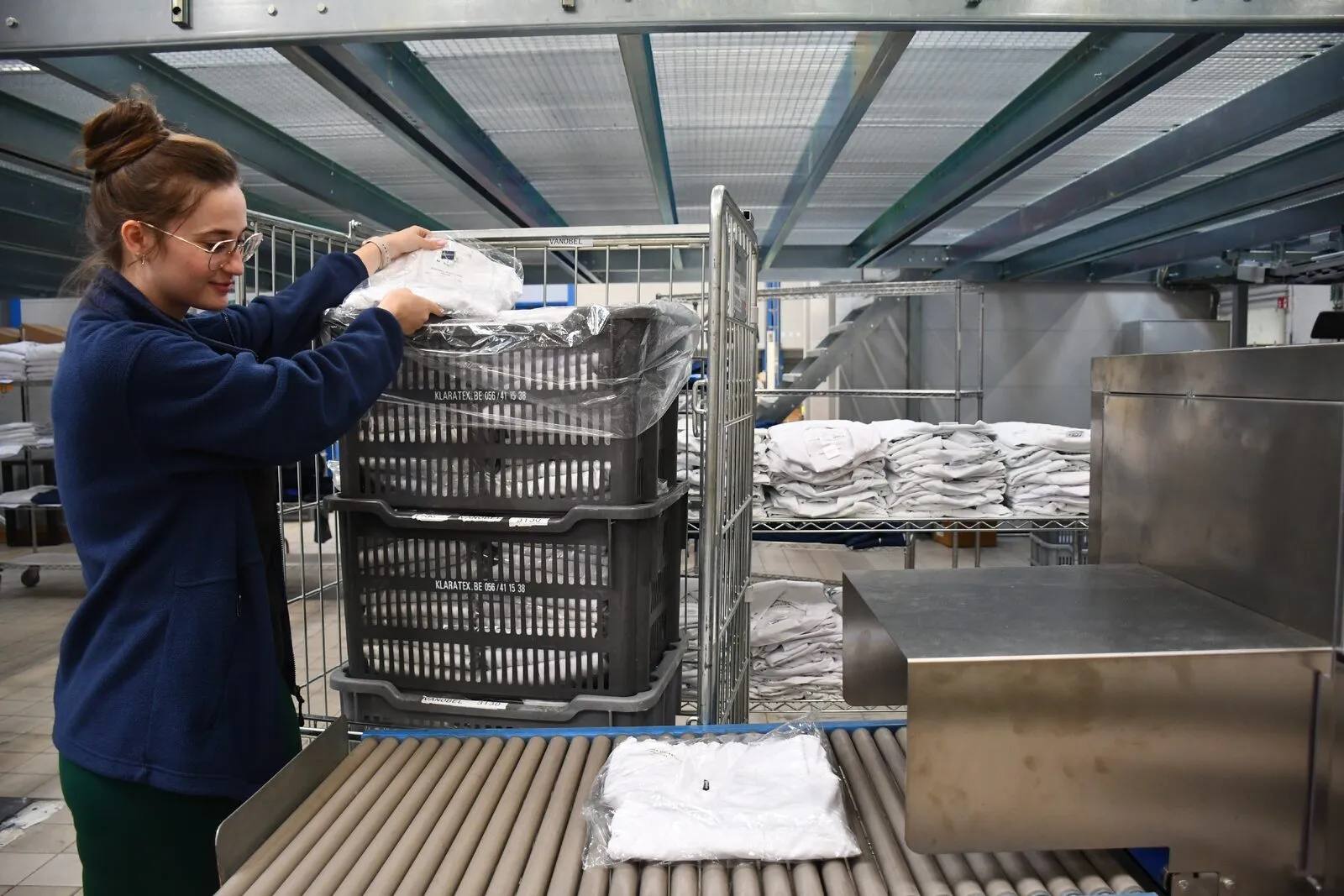
At the end of that sorting process, a second folding machine has also been added. "With this investment, we have doubled our folding capacity. There is still room for a third, should production require it." Right behind it stands an additional packing machine. "For certain high-care companies, it is important that clothing is packed individually and dust-free. We could already do that before, but with this machine the process is now fully mechanised." Dermaux now takes us right back to the start of the production process, where the dirty laundry arrives. A new soap station has recently been installed there. "We adapt the cleaning product and the wash programme to the level of soiling. We already did that, but with this investment we want to dose even more efficiently."
Chipped
Most of the clothing that is washed and passes along on a hanger now contains a chip. Klaratex started this programme six months ago, and it is now being rolled out ever more widely. "Every new garment immediately gets a chip as well. We use them to track clothing perfectly throughout our entire production. We can do that because we also fit our hangers with chips. This makes everything fully traceable and sortable." Dermaux saw this primarily as a potential source of efficiency gains in his own production, but he is also convinced of the added value of the chip on-site at customers' premises. "They can also manage their own logistics better, especially those who do not personalise their clothing and work with made-to-measure garments."
Inclusive
For all the new technology, Dermaux knows full well that his employees are his greatest asset. "It is not easy to find new people, though. That is why we try to be an inclusive company that is mindful of social employment. For example, we have entered into a partnership with the OCMW (public social welfare centre) to give people on a subsistence income a job. You sometimes hear the most harrowing stories, but when those people are still working here years later, you know you can make a difference. We try to look after everyone well, and we are thinking about ways to embrace all those nationalities and cultures even more sustainably and integrate them within Klaratex."
10% fewer kilometres
An example of how the company thinks about supporting its own team is the new transport planning that has been in operation since August. "We have switched to different, larger vans that require a BE driving licence. This allows us to carry twice as much laundry as with conventional vans. We trained, at our own expense, those drivers who did not yet hold such a licence. The result is that we now drive fewer kilometres, a saving of more than 10%, and that our drivers also all have a day off the road for a better work-life balance. It falls on a different day for each person, so that we can at the same time guarantee service to customers 52 weeks a year. That is the aim of every investment: improving our own efficiency so that we can take the burden off our customers' hands even better."
A business enquiry for Klaratex? Get in touch
Companies in this story
Keep following this
Get an email when a new story is published. No account needed.
- ThemePeople make the food industry
- SubjectSolutions
- CompanyKlaratex