Why we need to protect ourselves against counterfeit products
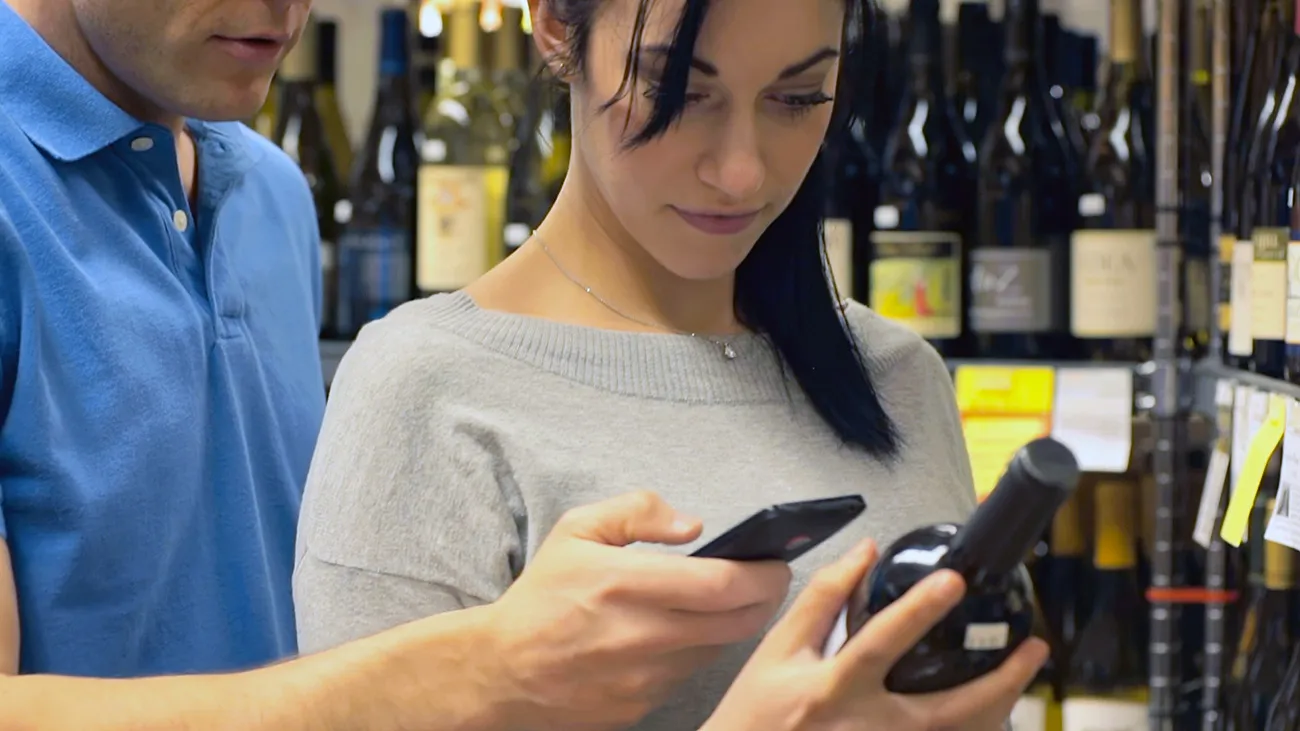
The shortage of raw materials in food & beverage has led to more cases of counterfeiting than ever before. Counterfeiting not only has a negative impact on food companies’ revenue, but also puts their brand reputation at risk. Counterfeit products do not meet the same quality and food safety standards. Transparency and validation across the entire supply chain are key to preventing counterfeiting. Markem-Imaje works closely with its customers to deliver tailored, automated solutions.
Counterfeit goods account for 2.5% of global trade. “Although most people think of designer clothes and perfumes, every product is at risk of counterfeiting,” says Tessa Eastman, Connected Products Strategist at Systech, a solutions division of Markem-Imaje. Current conditions have created a perfect storm for counterfeiters. “There is a shortage of products right now. The aftermath of the pandemic, a lack of staff to operate production machinery, geopolitical conflicts … all of this has had a major impact on our global supply chains. Add to that the digital disruption drawing more consumers to shop online …” The American National Groceries Association estimates that counterfeit products cost it between 10 and 15 billion dollars in revenue every year.
Protect your brand reputation
But the potential damage to a brand is even more important than financial losses. “For these reasons, large, established brands are well aware of what counterfeiting means for their business. Although it is more common with higher-priced products, counterfeiting is primarily a crime of opportunity. If there is a shortage somewhere in the supply chain, risks arise,” warns Eastman. The most popular categories today are olive oil, honey and seafood, but Systech also works with companies that produce water, alcoholic drinks or baby food. In April this year, 20 pallets of counterfeit baby food were seized and destroyed in Germany. “Just think about the impact counterfeit baby food could have. Counterfeiters do not care about the food safety standards that food companies take as their starting point in production. More than 1 million people die every year from counterfeit medicines. We want to prevent such scenarios in food & beverage,” Eastman adds.
Tailored solutions
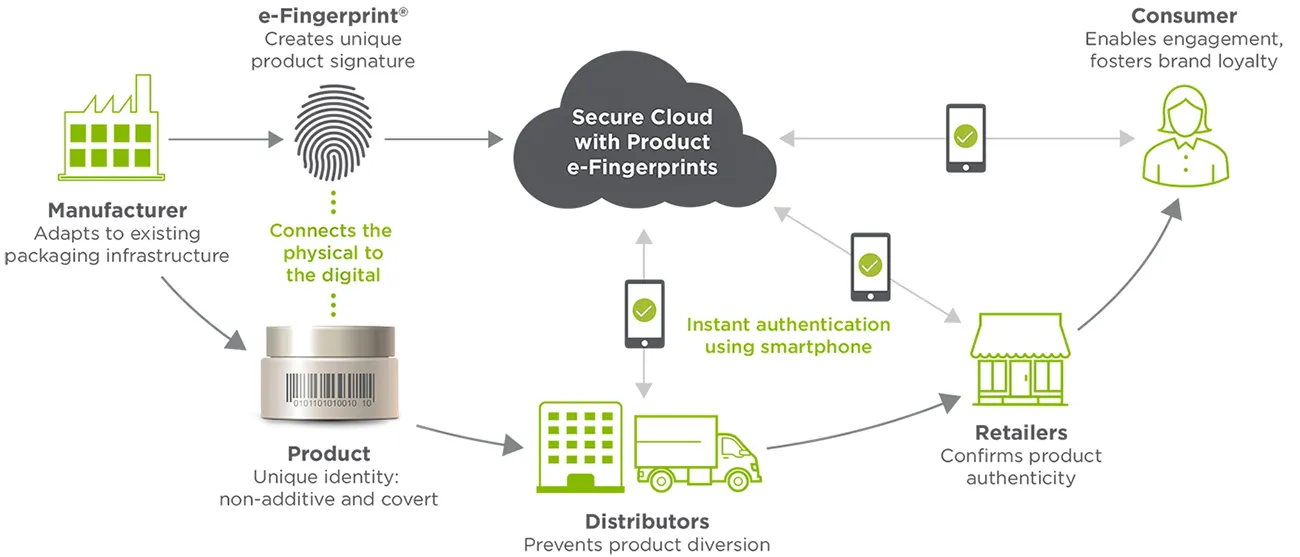
The problem is clear, but solutions are less straightforward. Counterfeiting can occur anywhere in the supply chain, and no two companies face exactly the same problem. For Systech and Markem-Imaje’s solutions, transparency and validation are key to successfully combating counterfeiting. “If you can trace a product through the entire supply chain, from individual raw materials until it reaches the consumer, you make it much harder for counterfeiters. We work closely with food companies to identify the problems first, then develop a solution based on their specific needs.” Systech offers a broad range of technical products and expertise in this field. One of these is UniSecure, which uses e-Fingerprint digital technology. “Labels with a linear UPC barcode and an e-Fingerprint are impossible to counterfeit,” Eastman assures us. “Every product placed on the market is recorded in the Systech cloud in an identifiable form. Anyone in the supply chain can then check and authenticate the label using the Systech app. Consumers can do this too.”
No impact on operational efficiency
A multinational producing sixteen different top-shelf alcoholic drinks is currently using this technology. Lost revenue and, more importantly, consumer safety were the main drivers behind its investment in e-Fingerprint technology. The pilot project set up by Systech was a great success, both in terms of accuracy and response time. Inspectors can now check product authenticity in real time with a quick scan using the Systech app. Eastman says: “What sets us apart is the scalability of what we offer. Our solutions can be tailored to any volume without compromising our customers’ operational efficiency. And that applies not only to detecting counterfeits. Our technology can just as easily be used to give consumers information about the origin and sustainability of the products they buy. It can tell a story and contribute to the consumer experience. In a world where food companies face competition from across the globe, a strong brand is more important than ever.”
Question about this story? Ask your question
Companies in this story
Keep following this
Get an email when a new story is published. No account needed.
- ThemePackaging and product traceability
- SubjectLegislation
- CompanyMarkem-Imaje NV